12-25-2015 – Costa del Sol, El Salvador and a Trip to NY

It’s been a few months since we posted anything to the blog, mostly because there wasn’t that much to say. 🙂 We have mostly been home on the boat in the estuary near the Bahia del Sol resort – where we were the last time we posted! However, we are no longer at anchor. Since we have decided to stay another year, we realized that our anchor is degrading (slowly, but inexorably) by the constant exposure to saltwater. Rather than paying a monthly rental fee, we went to the source and commissioned a mooring to be custom built for us. Bill is an ex-pat who came to El Salvador with his wife Jean on a sailboat, dreamed up and organized the Annual El Salvador Rally, and moved ashore on an island near where we keep our boat. They have been extremely instrumental in helping the cruisers that come through every year, as well as supporting the local community. Bill runs a mooring field, and has developed a design and a process for making them. So we asked him to make a extra-large one for our extra-heavy boat, and a week or so later it was delivered. At low tide, they brought two pangas alongside it, and tied it to a stout beam laid across the two boats. As the tide rose, so did the boats, until the 4000lb block of cement was hanging from the beam. They waited until the tide was nearly at its peak and began to slacken – which happened moments before sunset – and then when the mooring was above the place we wanted, they cut the ties with a single stroke of a machete. There was a big splash and the pangas jumped as the mooring dropped 20′ to the bottom. There is a length of heavy chain attached to the mooring, to which we have some “bridle” lines that secure the boat. (We pulled up our anchor before attaching the lines, so there was a bit of timing involved.) Over the next couple of days we fiddled with the placement of the bridles, but we were secure that first night on the mooring. He charged us about $500 for the whole event and being on a mooring will exert far less wear-and-tear on Lungta’s gear. When we leave, we’ll donate it to one of the locals who does a lot of work for the cruisers and is interested in starting his own mooring service.

I’m sure it will come as no surprise to learn that we’ve been fairly busy these last three months working on some boat projects. The biggest project was a repair project where we learned more about the details of the construction of our boat. For quite a while we’ve noticed some streaks of rust coming down the hull from various places, and a few of them originated underneath the wooden rail that caps the gunnels (the tops of the hull walls). In addition, these rails were bending or twisting slightly (but distinctly) upward, being pushed away by the expansion of rusting steel. We needed to find what was rusting and stop the process, removing and replacing it wherever it was damaged. When we removed the caprail we found that there was a steel bar perhaps an inch wide and a quarter inch thick at the top of the gunnels. It was apparently used to provide some structure for the welded wire mesh that’s the framework for all the cement, but somehow came in contact with saltwater and began rusting. Although some of the wire mesh was also rusting, it was fortunate that we addressed it fairly early and didn’t have to replace very much of it. Breaking away the cement attached to the wire mesh was quite challenging! After the worst of it was removed, we rinsed the entire area thoroughly, encapsulated it in epoxy and re-covered it in cement, forming it and smoothing it to recreate the outer curve of the hull. Then we encased the whole area in another layer of epoxy (to reduce the likelihood of saltwater incursion ever again) and replaced the caprail. We initially did two eight foot sections, but noticed a third section that was beginning to show the telltale signs. Unfortunately the third section of wooden rail split as we pulled it up. We tracked down a lumber yard that was nearby and happened to have some local-grown teak. We purchased a rough-hewn 10′ plank, about 12″ wide and 3″ thick. The yard wanted $18 for about 10 board feet of teak, but we couldn’t bring ourselves to pay any less than $20. These last couple of weeks we’ve been uncovering the hidden caprail from this plank: first by tracing and cutting out the broad shape, then routing a channel underneath to cup over the cement gunnel, planing it to the right height, and routing the corners to a pleasing rounded edge. Finally we still need to sand it all perfectly smooth. We’ve met a local, Reymundo, who does a lot of wood finishing for the cruisers, and have decided to have him sand and varnish the entire caprail, including the portion that we’re replacing. By the end of January it should all be as good as new – and beautiful too!

First Cut at Our New Caprail

First Cut at Our New Caprail

Another project that we’ve been working on is to replace the fittings that connect the chains at the bottom of our rigging cables to the chainplates on the hull. We replaced these shortly before we left Portland, but were unable to find stainless steel parts so we bought plain steel. These have rusted a good bit in the 5 years since, not enough to be risky yet, but certainly unsightly (remember those streaks of rust I mentioned earlier?). There’s a really good machine shop in town, and we came up with a design of our own (rather than try to purchase specialty parts that don’t exactly fit the bill). We ordered bronze material from the U.S. and had the shop cut the bars down to pieces that will make the connection. We’re polishing those pieces up so they are smooth and shiny – at least initially! We’ve replaced 8 of the 14 so far, and expect to have the rest in place before the end of January.

On one trip into San Salvador, we found a shop that makes stoves and steel bedroom furniture. Our old camping stove was getting old; the burners were getting finicky and the legs were starting to rust away. We poked around the shop and ended up talking with the owner about custom-building a stove for us. Although most of his stoves were made from plain steel, we needed ours from stainless steel. We also asked for a wind-shield and a drip tray, and he powder-coated the whole thing in a perfect dark burgundy color. Just a week later we went back and picked it up. It’s beautiful, and we’re thrilled! We’ve also made a new friend: Fernando is likely to come for a visit next month.

Our New Stove

Our New Stove

We had a couple of CouchSurfing guests for a couple of nights. George and Julian are two young Germans who were traveling from Mexico down to Costa Rica on the cheap. They are both VERY tall, fun-loving and friendly. As they passed through El Salvador, they found our page and requested a stay. They had no idea how far the Costa del Sol peninsula is from San Salvador, but they did manage to get here by bus. They happened to be visiting the same weekend as a big fishing tournament. The tournament finished each night at 5:00, when everyone had to have their daily catch in to the officials for measuring and weighing. Afterwards they had a big dinner with an open bar (sponsored by one of the tournament sponsors, Cana de Flor rum!) and live music. Our young friends – and many of our older friends as well! – enjoyed the party along with the tournament participants! There was dancing and a daily slideshow from each of the participating boats. Our friend, Jose Ramon, who is the owner-manager of our favorite machine shop in San Salvador, had a boat in the tournament. We enjoyed running into him on the first night. His boat was in the top three, and caught several beautiful tuna – which he generously shared! We had two very nice meals from the chunk of fish that he offered us.

In mid-November we traveled to New Jersey to visit Dan’s mother, and spend Thanksgiving with the extended family. There were more than 20 people this year, and 3 of them were new babies. The demographics are changing! It was, as always, a festive and stimulating affair in the 200-year-old farmhouse in upstate New York. The weather this year was very mild, even pleasant. We were never threatened with snow, and it’s 70 degrees on Christmas! Quite unseasonable! We stayed with Dan’s mom the rest of the time we were there, three weeks altogether. We went into NYC a few times, once to see a play that Dan’s nephew’s wife, Alexandra, was in. It’s interesting to see someone that you know acting quite different than you are used to. 🙂 It’s also really exciting to see Alexandra’s acting career beginning to take off! We spent another afternoon visiting a friend that we met in La Cruz maybe 3 years ago. Lex is an author who was spending some “reclusive” time in Mexico, hoping that it would help him get writing. I’m not sure how well he met that goal, but we enjoyed spending time with him then, and were pleased that we had an opportunity to meet up with him again in a completely different environment! As usual when we go back to the States, we went on a shopping spree, mostly via Amazon. We came home with lots of parts and pieces that will further more of our projects.

Thanksgiving at Nancy's House

Thanksgiving at Nancy’s House

The most involved, and perhaps the most interesting, is a home-grown monitoring system for our boat. More than once we’ve had troubles with the balance of power coming in via solar panels vs. power going out mostly to our refigerator/freezer. When we’re at home, we turn on the generator and charge the batteries right up, but when we’re gone that’s difficult. We’ve purchased a tiny computer motherboard called an Arduino, and a ton of electronic parts that will allow us to sense the voltage level at the batteries, the temperatures in the fridge & freezer, the water level in our bilge, and whether it’s light outside. There are also relays to turn the fridge & freezer on or off and components that will help us connect this system to the internet so that we can see the data when we’re on the road. Now we need to figure out how to put all the pieces together in a way that’s useful to us – and write a program to make it go! We’ve been working on this project an hour or two a day, most days since we’ve been back. It’s addicting!

We’ve got some irons in the fire, but not much else to report. We’ve just received a delivery of bottom paint, our latest attempt at finding a solution that lasts more than a year. It’s expensive and a lot of work to haul the boat out of the water to repaint, and we’re always hopeful that our latest discovery will allow us to go longer. The last round was a year and a half ago, when we tried CopperCoat. Although it has indeed been more than a year, it has not held up well enough for us to justify the high cost. We’ve had mixed success with this paint; there are significant areas of the hull where it didn’t adhere well, but where it did adhere it works great. We knew that this product was finicky to apply but thought we’d done a pretty diligent job of applying it. Oh well, on to the next round! We’ve mentioned previously that we’re searching for a place to haul out – and may have found one, but we’re still working on getting a quote and a schedule. Stay tuned. 🙂 We ordered the paint through a chandlery in Guatemala, and learned that they also do business with a place that can regalvanize objects – like our anchor, that isn’t in use at the moment! When the paint was delivered we hauled our anchor up to shore and dropped it in their truck to take back.

Our Rusty Anchor

Our Rusty Anchor

We’re having a low-key holiday season. It’s kinda odd celebrating winter holidays in the tropics. Images of snowmen and snowflakes just don’t seem to work. Regional and warming foods like turkey and eggnog or hot chocolate seem out of place. But there are lots of parties and fireworks, and a celebratory mood around town. There are several fireworks stands set up on the road down the peninsula. On Christmas Eve, there were fireworks up and down the estuary into the wee hours of the night. There’s a New Year’s party next week at the resort from 12 midnight until 9am, which will have an open bar on the beach, music and dancing – all for $125 apiece. Yikes! Perhaps we’ll just enjoy the music from the boat. 🙂

I’m hoping to get this posted while it’s still Christmas, so that we can wish you all a Merry Christmas and a Happy New Year.  Follow your dreams – it’s what makes for a life well-lived!

Posted in Uncategorized | Comments Off on 12-25-2015 – Costa del Sol, El Salvador and a Trip to NY

9-30-2015 – Costa del Sol, El Salvador and Some Travels to Guatemala and Mexico

The month of August flew by without enough blog-worthy to share (but September was busy, busy, busy). We spent the first two weeks visiting family in the States, and the last two weeks working on lots of small things around the boat. Dan’s family gathered in Atlanta, Georgia to celebrate his father’s health (the event was planned after a cardiac bypass surgery late last year), only to find David back in the hospital again for pulmonary issues. It was good to be there when he came home, and wonderful to spend several fun days with all four siblings together – but we did come home with the heavy sense that David’s body is aging and he will never again be able to do many of the things that he used to enjoy.

We flew from there to Houston, Texas to visit Kathy’s mother, who is also making life changes. Marilyn has come to recognize that the house she lives in is too big and requires too much maintenance for her to keep up with. She has decided to move into an independent living complex, essentially an apartment with a long list of services, including a cafeteria and regular van trips to local services like doctors and grocery stores – and a constant stream of social events. She arranged for us to take a tour of the place so that we could more easily picture her at home. We helped her tackle some of the difficult parts of getting the house ready to sell (mostly organizing stuff that needs to go!). She will take a few months to complete the move (there’s no need for urgency, so why hurry?), and then probably another few months to get the house on the market. It’s nice to know that things are moving in a direction that will make her feel more comfortable with her living situation!

When September came around, we were ready to change gears again. This time the plan was to spend a few days in a Salvadoran town with our friends on Isleña, visit a couple of new places in Guatemala and renew our visas in Mexico, and although that is ultimately what happened it didn’t happen exactly according to plan!

As we left for our journey, we stopped for lunch in the town of Olocuilta, a wide spot in the road packed with pupuserias. As you may recall, pupusas are the national food of El Salvador; they are to tortillas as a jelly donut is to a piece of bread: stuffed with ingredients like cheese, beans, chicken, and spinach. This town is famous for its “world-record” largest pupusa (but I can’t imagine there was much competition from French or Japanese chefs!). We tried our first rice pupusas (most are made with corn flour or masa) – and will definitely look for them again! After lunch we moved on to the day’s educational program: we visited Joya de Ceren, a World Heritage Site that is often called the Pompeii of the Americas. It’s a village that was buried in volcanic ash around 600 AD. A major difference between this site and Pompeii is that there are no human remains – they had enough warning that they were able to leave, but there were still dishes from a half-eaten meal on a table. Archaeologists have learned a lot about “common” people (as opposed to the rulers and religious elite) from this site because of how well the plant materials were preserved by the roughly 6 meters of cool ash that quickly settled over the town.

Joya de Ceren

The first segment of our excursion was timed for a regional festival. SaM and David from Isleña have visited the town of Ataco before and wanted to return for the Fiesta de los Farolitos. They did some advance planning (imagine that!) and found that all of the hotels in town were already full for the weekend. But they knew a tour guide who lives in town that has a couple of rooms in his home that he sometimes rents out. Ernesto and his wife Alexandra generously shared their space with four gringos for the holiday weekend. It was very cool to get a glimpse of what a local life looks like. Their home is composed of 3 rooms (plus a kitchen and bathroom) surrounding a courtyard which is half garden and the other half, which is covered from the elements, is used for dining and socializing. There is an area at the front of the house that is designed for a business, in their case an internet cafe that is mostly used by local boys for internet gaming. Ernesto has a very sweet puppy, a mini border collie named Cherry, who formed a deep relationship with Dan. He taught her to come, sit and (sometimes) to lie down – and when she barked at night, SaM held Dan responsible. 🙂

The festival commemorates when the statue of the virgin was brought to the church from Mexico over the mountains. Apparently the party traveled with lanterns that were visible winding down the mountain path as they approached. The town lights up with candles everywhere, even creating structures to hold dozens or hundreds of them. Alexandra is an administrator at a local college, and managed to convince a group of students (studying tourism!) to put up a display in front of their house. They arrived around noon and didn’t leave until well after midnight. They spent most of the day assembling an awning, a water fountain in front of a life-size statue of the virgin, and a small “garden” showcasing several of the most important local plants – and of course candle lanterns, can’t forget the farolitos! Around town, people were launching floating candle lanterns into the sky, there were three big stages for live music and lots and lots of food stands in the town square – and there was a really exceptional fireworks show. But after four festive days we were all ready for a quieter venue, so we drove up to Tacuba, a town at the entrance to El Impossible National Park. We had all gotten various forms of a cold, and laid low that afternoon. While David and SaM napped, we investigated the idea of taking a hike on the mountain the next day. We tried to drive to a trail-head, but the road got way too rugged very quickly, so we returned to ask about a guide. We talked with Nina, the only other person staying at our hotel, who said that the trek wasn’t as interesting as others she had been on nearby, so we decided to head on to Guatemala. The next morning, when David and SaM decided that they’d rather sleep off their colds at home on their boat instead of paying for a hotel bed, we invited Nina to go to Antigua with us instead of taking the bus. Lots of fluid plans!

Fiesta de los Farolitos  Candle Lantern MovieVirgin & Lanterns

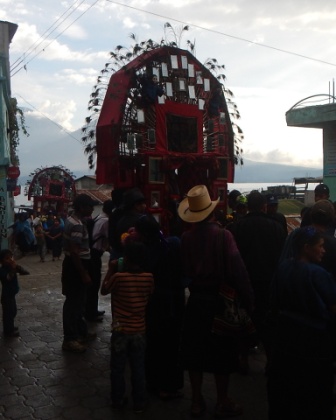
Antigua is a VERY beautiful bustling town, and while we have enjoyed the city and will certainly go back, it is full of tourists. We were seeking something a little different this time: we wanted a closer look at the Mayan experience, so we decided to drive into the neighboring mountains to try to find a smaller town a bit more off of the beaten path. We spent three days mostly driving around the western highlands, through spectacular country. The first night we stayed in Santa Caterina Palopó, a small town on Lake Atitlan. As we came into town, we encountered a procession heading down the main street. It was composed of two wooden “floats” that were carried on the shoulders of 4-6 people, and dozens of others walking along with them. There was lots of incense and explosive shots that went off periodically – and continued through the night. We pulled the car aside, found a hotel, and then walked up the *steep* paths to the church, which is where the procession ended. There was a 6 piece brass band playing, and lots of townspeople there enjoying themselves. All the women were wearing beautiful blue blouses from a locally woven fabric which we deduced was the town’s traditional color. It turns out that the neighboring town had similar garb, but in green. When we stopped in one shop to look at their fabrics, the two women were very friendly and enthusiastically dressed us in local clothing to take a photo. We enjoyed talking with them about their language (another of the many Mayan dialects) and the ongoing celebration. We had dinner at a hole-in-the-wall below the hotel, facing the lake. A sweet Mayan family ran this restaurant, with their baby was swinging in a hammock right next to two of the dining tables. They had another guest, an American woman who was staying with them for a few months; this was her third year visiting them, and she had come to think of them as her second family.

Mayan Portrait  Santa Catarina Procession

The next night we ended up in a town that has probably not seen a gringo in months. Todos Santos de Cuchamatán is a completely Mayan town in a spectacularly beautiful and isolated valley. It seems to be the center of a cluster of towns, perhaps something like the county seat. It’s the only one big enough to have a hotel. The weekly market was still in swing when we arrived, and we spent an hour or two swimming through the rivers of shoppers and around the islands of stands. Most people were in traditional dress, with many variations. The men in this region also have a traditional costume that they still wear daily. Their clothing consists of pants made from red and white striped denim, a long-sleeved white shirt with blue stripes and a heavy collar often worn as a jacket, and often they also wore a set of black knee-length chaps. (We noticed the same fabrics used for curtains in our room and tablecloths in the hotel’s restaurant.) Both men and women could be seen wearing a white straw hat with a small brim trimmed with a blue ribbon. One day we drove further down the valley to try to visit another town, but the road got very rough and we decided to turn around just as we spotted a motorcycle by the side of the road. A young man and his father were heading into the “big town” to get some fuel and cooking oil when they got a flat tire. They did not have the necessary tools to remove either the tire or the wheel, and neither did we. But we offered them a ride into town and they eventually accepted, although the young man chose to ride the bike along with us rather than figure out a way to get back. We were disappointed that our common understanding of Spanish was not really sufficient to have much of a conversation – they spoke less English than we did Quiché!  We do know 2 phrases (“Thank you” and “Hello”, which translates literally as “How is your heart”), but the conversational possibilities were limited. It did feel good to help them out, though.

Cuchamatan Valley   Todos Santos Men

We stayed in this town for 3 days – until our plans changed. Our friends SaM and David sent us an email saying that the boat’s anchor light had gone out, and with further discussion we realized that the main battery bank had probably run down after a few days of cloudy weather. We talked them through starting the generator, but decided that we should probably go home to make sure that everything was stable again. They did us a HUGE favor by alerting us to the problem and then managing the situation until we could get home two days later. Unfortunately, our timing was awkward: it was the day before the big celebration of the Central American Independence Day from Spanish rule. When the news came out in 1821, runners headed all the way from Antigua (at the time, the capital of the entire region) to arrive 5 days later in Cartago, Costa Rica. To commemorate that activity, groups of people take to the streets, running with a torch (or several!) at the front, and typically a van or bus following close behind. Apparently, though, they don’t necessarily retrace the original route. 🙂 People along the way encourage them with whistles and shouts, and many offer them water or spray water on them to help them cool down. This practice devolved over the course of the day to water balloons being thrown at runners, who sometimes fought back with their own water balloons. It seemed mostly to be in good fun, but we kept our car windows shut when runners were passing! The traffic to Antigua ground to a complete stop just before dusk, and didn’t move again for almost two hours. We were tired and hungry when it finally did, and relieved to arrive at a familiar hostel an hour later. Just after we checked in, two guys walked up to get a room, but weren’t able to communicate with the receptionist with their limited Spanish. We helped provide translation services – and were very proud of ourselves!

Independence Day Runners

The next day, Independence Day, we decided to stay put: if traffic was as bad as it was the day before, who knew how bad it would be the actual holiday? Also, would the border be open on a big national holiday? Why risk the hassles, when David and SaM assured us that they had things under control? So we enjoyed a leisurely day in Antigua. That evening we were having dinner on the roof of our hostel when the guys that we helped the night before arrived to take photos of the volcanos ringing the city – one of which was sending up small puffs of ash! We enjoyed a pleasant conversation with them, exchanging stories. Scott and Mark had been traveling for almost a year and were nearing the end of their time. They were planning to start a restaurant business together in New Zealand (Scott is from New Zealand, Mark is from Bermuda and has spent many years in Australia). They had skipped through from Costa Rica to Guatemala, and had a few free days before their next meet-up. We invited them back to the boat with us, promising to introduce them to pupusas, so they would have a genuine Salvadoran experience. We drove back to the boat the next day, stopping again in Olocuilta. The pupusas were still yummy, and we found Lungta right where we left her. We spent a couple of relaxed days showing Mark and Scott “our neighborhood” and making sure the batteries and refrigeration were in good shape. We played in the deliciously warm ocean waves one day and the swimming pool the next. Then we all headed back to Guatemala. Although we got an early start, we couldn’t quite make it to the Utopia hostel near Semuc Champey before nightfall (the road to Utopia is barely passable during daylight and not safe to try in the dark), so we stopped in the nearby city of Coban in the pouring rain. We stumbled on a new hotel which was really sweet, and they had a kitchen where a woman (who Kathy guessed was the mother of the proprietor) cooked us dinner just across the hallway from our room. The next morning we continued on the crazy rocky road to Utopia.

Utopia is a nicely organized backpackers’ hostel on a beautiful piece of land fronting the same river that runs through the limestone falls and pools of Semuc Champey. They have hammocks, bunks, small private rooms that they call nooks, and separate cabañas. We opt for the nooks, because part of the charm of the place is the ever-changing community that forms there. Although the folks we’d met the last time had moved on, there were new people to meet. This time there were roughly a dozen Israelis there, coincidentally, not traveling together. We walked to the pools the next day with Scott and Mark and 5 of the Israelis, and found a strange situation. The locals were in a dispute with the government’s tourism department that runs the national parks. The strike meant that no one could take our money, but we were still allowed in. We tried to donate our admission fees to some of the workers and their families, but they wouldn’t accept it. We learned that the protesters had actually closed the road to the park with huge boulders for several days the previous week, also preventing traffic in or out of Utopia. This created a little bit of ill-will, but was getting straightened out. The day we arrived was the first day that Utopia was able to get more provisions, and the next day was the first day that the kitchen staff was back on duty (they’d been temporarily laid off during the conflict because their families were intimately involved with the protest that closed access). Things were pretty much normal by the time we arrived but it felt tenuous to the people running the hostel. It rained every afternoon, and we were nervous about getting our car out through the steep and potentially muddy roads. Mark and Scott needed to get going, though, so they took a transport which had sufficient clearance and better traction. We left the next day, and happily made it out with no trouble.

Semuc Champey Pools  Semuc Champey Falls

We headed for Mexico, to renew our visas again. Although we’d just been to the States a few weeks previously, we knew that our next trip outside the region (Thanksgiving with Dan’s family) would be more than 90 days from our entry, so we’d need to renew them before that trip and now is as good a time as any. We hadn’t spent any time in the very south of Mexico in our way down, because we were hurrying along in order to make it to El Salvador while the weather was till conducive. So now we were returning with the intent of visiting the colonial city of San Cristóbal de las Casas and the ruins of Palenque. The roads between Semuc Champey and the border were very rugged, and it rained for part of the way, causing the nearby hills to become unstable.  Although it wasn’t raining hard, there were times when it seemed like we were following a riverbed. Since we couldn’t get quite as far as San Cristóbal in one day, we stopped in the smaller city of Comitán de Dominguez, which SaM had recommended to us from a short stop they’d made. We stayed near the central park, which we found to be delightfully full of life, and splurged a bit on a “fancy” dinner of tapas and a glass of wine.

River Road  Comitan Church

We moved on to San Cristóbal and found it to have a similar feel to Antigua: a colonial city in the cool mountains with a lively tourist trade, making it feel pretty cosmopolitan. The biggest difference is that this city is not frequented by English-speakers. Spanish really is the primary language here. We found a sweet hostel with a big backyard that our room looked out on. The yard sports fig trees, hammocks, and an amazing view of the surrounding countryside. We spent two nights here, and continued our culinary splurge: the first we each had a mezze plate at a really good Lebanese restaurant (Arez), where we talked with the proprietor about how life had brought him to Mexico from Lebanon via London. Unfortunately, he feels a deep cultural divide and even after 11 years does not feel comfortable with the town he lives in. The second night we ate in an Italian place (Trattoria Italiana) that offered excellent homemade ravioli. Both staff and clientele were comfortable and happy. The cuisine was superb and the wineglasses were full. We also spent some time wandering the market and the streets near the central park. We bought macadamia nuts from a guy with a wheelbarrow full of them, who offered to break them open with a hammer wrapped in shiny silver tape. We enjoyed mucho chocolate in various forms, and watched a street dance performance done by two guys with rattles on their calves and a huge bird mask with feathers from the tail of a pheasant. Their drumming was infectious – and the town is vibrant! One day we ran into a parade: we have no idea what it was celebrating, but the kids with inner tubes sure were having fun! We had thought we might visit a nearby town that had an interesting church (a mixture of Catholic and traditional Mayan religious themes and practices), but we read some grisly news that a couple of men who had stolen a taxi were lynched and set afire in the town square. We didn’t want to visit with that kind of energy around town; perhaps some other day…

Macadamia Vendor  San Cristobal Hostal

The next morning we set off for Palenque, a 4 hour drive – or so we thought! We’d planned on stopping at some waterfalls on the way, but about a third of the way there we ran into a roadblock. Although we didn’t see it, we were told that there had been a landslide and that it would be hours until it was cleared. Many people were waiting, but we decided to return to Comitán and try a different route the next day. (In the morning we saw a parade in celebration of the National Week of Adolescent Health. Central America seems to love parades!) The next day we got an early start but encountered additional problems. Just before the town of Ocosingo we ran into another roadblock, this time a group of men who were demanding money for a political party called FSLN, which was mobilizing against the parties that had killed the 43 students last year. It turned out that this was the one year anniversary of the tragedy, and it appears that the government is not making much progress in resolving it. Many people across Mexico are very unhappy about the situation, blaming corruption in many forms. We “donated” 100 pesos (about $6US) and were on our way again – but not for long! A few miles down the road we ran into another group of men asking for money to maintain the roads (in a section that was actually in quite good repair). There was a good size backup here, too, but we eventually paid them about $1US and they moved the blockade aside. Several other cars went through on our payment. Another hour down the road we ran into a third stoppage. This time Dan got out of the car to investigate while Kathy stayed with the car and talked with the truck driver behind us. We both got the same story: more civil unrest around the issue of the 43 students. The road was being blocked by a propane delivery truck and a bus, and would probably be opened up again around 6 in the evening. Apparently this kind of thing is happening frequently, and the locals are both interested in seeing the issues dealt with and yet their ability to move around freely is impacted. We decided that this just isn’t a good time for us to be driving through Chiapas state, and that it was time to return home. The boat is calling, and hopefully we’ll get another chance to see the area during less turbulent times.

We took two full days to drive home, and although nothing especially noteworthy happened it was an exciting drive. There had been a good bit of rain while we were in Mexico, and we saw numerous places where the hills had slid downwards. At first it was a few rocks here and there in the roadway, then it was a stretch with a lot of mud where we lost traction a few times. The muddiest stretch was all downhill, and we realized that we would be unable to turn back if we encountered an impassable section. There were lots of places where the potholes were deep enough to cause some damage, but now they were filled with muddy rainwater and more difficult to assess. One time the front wheels dropped in so hard that we thought we might not be able to get out again, and indeed backing up was fruitless, but somehow we were able to move forward and suffered no damage. An hour or two before arriving in Antigua (for the last time on this trip 🙂 ), it seemed that the brakes weren’t functioning properly. Did we smash a hole in the line and lose our fluid? The problem cleared up after an hour or so, though, whether due to a bubble that dissipated or some new self-healing technology we may never know. Arriving in the familiar hub of Antigua was a relief, and the rest of the trip was on better and more traveled roads.

Buckling Road  Rush Hour Traffic  Roadside Stand

We were still in Mexico on the night of the super-blood-moon, but for us it was a non-event because the sky was cloudy and it rained. We saw some nice pictures from friends in the States who had clear weather. And we heard stories from Costa del Sol, where the boat is, of high tides that caused flooding on the island right next to our boat. Lungta was just fine, but virtually all of the 75 families that live on this island were up to their ankles – or knees, or even hips! – in salt water. Most of their possessions, including beds and firewood, were soaked. No one was injured, and no homes were lost, but it will be a while until life returns to normal for these poor people. Only a few of them have water catchment systems to allow them to capture rainwater. Many of them have to paddle their dugouts (called cayucas) across the estuary several times a week to fill jugs of water from friends or families on the mainland. Lots of aid has been offered by the cruising community, both locally where they’ve cooked meals for the families and abroad where money has been donated for various projects including improved berms to keep the island dry and professional class mosquito sprayers. It’s a sad situation, but now that the full moon has passed they can focus on prevention and getting back to normal.

We’re glad to be back home again, and expect to spend the next few weeks working around the boat and socializing with the few people who are still here in the boating community. (Many folks have left recently, continuing their travels north or south, and a few are planning to head across the Pacific this coming spring.) Don’t know what’s after that…

Posted in Uncategorized | Comments Off on 9-30-2015 – Costa del Sol, El Salvador and Some Travels to Guatemala and Mexico

7-28-2015 – Costa del Sol, El Salvador and a Visit to Honduras, Belize and Guatemala

We began July with some exploratory surgery for Lungta. We had been seeing some unsightly streaks of rust coming from underneath two stretches of the wooden cap-rail, an area that is normally unremarkable. Before we actually got around to investigating, we noticed that the cap-rail itself was being pushed up and away from the cement. This made it clear the nature of the problem, but not the severity. Seawater must have gotten underneath the cap-rail through a crack or gap in the sealant, and contacted the steel framework that supports the cement. If left unattended indefinitely, the rust would spread throughout the framework and ultimately destroy the hull. The question was: how much of this framework was already compromised? We were pretty nervous as we began to deconstruct (a small part of) our boat. The first step was to remove a segment of the cap-rail covering the rust-damaged area. We used our multi-tool (an amazing power tool that we bought for this very purpose about 6 months ago, but have already used a dozen times on other jobs) to cut away the sealant between the pieces of wood. The cap-rail was joined quite nicely, with a three-segment zigzag shape which preserves strength. We followed that zigzag closely, and also had to cut away many of the screws which broke as we tried to remove them. After removing the rail, we were able to see that there was a steel flat bar to which all of the vertical rebar was attached. This steel plate was quite degraded, and there was a lot of crumbled cement caused by the expanding rust. There was almost certainly a void, or air pocket in this location, which would have contributed to making this particular spot more vulnerable. We spent a couple of days with hammers and chisels, chipping away at the cement that covered the rusty wire. Because we caught the problem fairly early, not much of the frame was really compromised – which also meant that the cement above it was strong and hard to remove. After removing the worst of the rusted wire, we installed and wired in new pieces of rebar and welded wire mesh – as similar to the original composition as possible, except that we did not replace the flat bar on top, since we determined that this was essentially an artifact of the construction process and not an intentional part of the design. Dan contacted the original owner of the boat, the guy who dreamed her up and put so much of his heart and soul – and labor – into building her, and Herman confirmed that hypothesis. What a pleasure it is to have such a knowledgeable and helpful resource! After the new frame was built back up, we mixed up some cement and troweled it on, fairing it as best we could to match the original curves. We made sure to keep it moist for the first few days, so that the cement could cure at a reasonable pace. We still need to fair the new cement a bit more using a cement grinding wheel, and then repaint, and there’s the other section to tackle, but the scary part of the job is behind us. Hooray!

Exporatory Surgery

After that project, we took off on another adventure. What a surprise! 🙂 Our visas into El Salvador were good for 90 days, and would expire in mid-July. These visas are actually good for 4 Central American countries: Guatemala, El Salvador, Honduras and Nicaragua, so we would need to leave that area for 72 hours before we could get a new 90-day visa to the area. We decided to head to Belize, going through Honduras and Guatemala on the way. We packed up in a hurry, though, and got halfway to the border with Honduras before we realized that neither of us had grabbed the passports – oops! So we turned around and drove the four hours back to the boat. But we did make a point to take a different route, one which we hadn’t seen before, and we enjoyed the scenery. We saw an unusual sign on the way: any idea what this critter is? We had no idea, although we were to see a couple of these just a few days later while wandering around the ruins of Copan. It’s called a paca or a gibnut, and it’s a mostly nocturnal rodent, roughly the size of a large housecat. Who knew?

Paca Crossing  Paca at Work

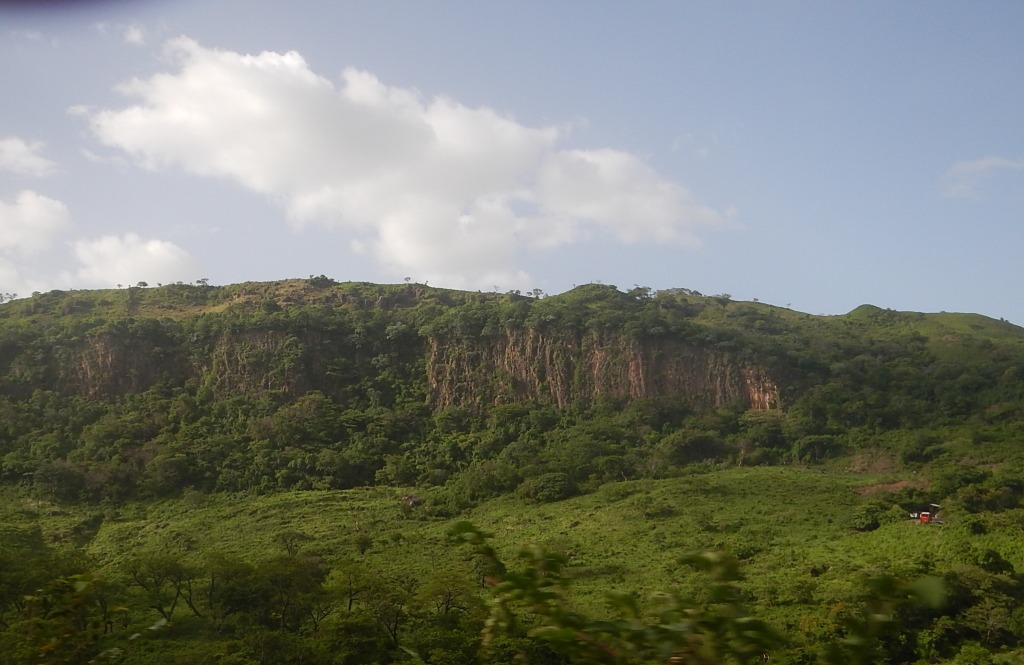
The next day we set out bright and early for Honduras, and managed to cross the border before stopping for the night. The mountainous terrain in Honduras is truly breathtaking, so we decided to take an extra day or two in the area before going on to Copan. We spent a night in the old colonial city of Santa Rosa de Copan and another in the small town of Gracias (a Dios). Characteristicly, we enjoyed several hours people-watching in the town square of Gracias. We took a nice drive through a national park to a tiny village called La Campa, which is nestled at the base of a dramatic cliff – on which someone has somehow managed to paint a welcome message! The drive to Copan was also beautiful, and we arrived early enough to spend the afternoon strolling through a bird sanctuary which is situated on a nearby mountain. We saw dozens of rescued birds in nice surroundings, including Honduras’ national bird, the scarlet macaw. Periodically they release some of these birds near the ruins, if they are rehabilitated enough to live on their own. They have a nice area where visitors could hold one or more of the birds for a short interaction, and Kathy couldn’t resist!

La Campa

Toucan Sam?  Avian Friends

The Copan ruins are an easy walk from town, and quite accessible. Although several people had told us that hiring a guide was particularly helpful, we did not find that to be the case. We enjoyed our visit, but found it to be fairly expensive. The admission cost about $15 each, and an additional $7 if you want to visit the on-site museum, and a guide costs another $15 per person. We found the write-up in our Lonely Planet guidebook to include enough information that we would have been happy (and our guide tried to spice things up by focusing on the violence of human sacrifice, which did not suit our tastes). The site includes dozens of structures that have been at least partially restored, including some surfaces that still show some very nice carving. The ancient city extended quite a bit further out into land that is privately owned. Owners are apparently prohibited from farming on this property, but not required to give it up. This city was quite influential in its day (roughly 500-900AD), and at its peak more than 20,000 people lived here. Visitors are allowed to wander around quite freely, much more than would be the case in the States. On our way out of the park we saw about a dozen of the scarlet macaws, some of them flying around – truly magnificent birds!

Copan Carving  Copan Structures

An unpleasant incident occurred when we left Honduras: a border guard shook us down for a bribe. Many of the countries in this area are making an effort to eliminate graft, but the attempt hasn’t yet been fully successful in Honduras. We still had about 10 days left on our visas, but the border guard that we worked with told us that we were overdue. He sat down with us in an office and told us that he could fix our problem, but hoped that we “would do something nice” for him in return. Although he spoke perfect English, he (deliberately) misunderstood when we asked how he calculated the 90 days, offering a partial explanation by saying that he counted from the day we left Mexico rather than the day we arrived in El Salvador, making the 3 days we were in transit part of our visa period. We satisfied his request with $30, but the experience left a sour taste in our mouths.

While waiting for the 72 hours to elapse we took the opportunity to visit our friends, John and Lucy, who live on their ferrocement boat in Placencia, Belize. Placencia is at the very end of a twenty mile peninsula that is quite narrow. The road down the peninsula has only been paved for a few years, and the area is going through a huge boom, largely becoming an expat zone with resorts and fancy homes. The town has long been a tourist area and still retains much of its lively laid-back seaside character. We stayed with John and Lucy for two days and had a great visit. We went out for a snorkel one day to a nearby caye, using a utility boat from the marina that John works with. This was Dan’s first Caribbean diving, and hopefully won’t be the last! The water was deliciously clear and warm, and there were lots of beautiful corals and huge purple sea fans. Kathy was tickled to see the Caribbean cast of characters again, and delighted to see a small group of tiny cuttlefish. She spent a quarter of an hour watching the hand-sized creatures eyeing her. John and Lucy were our inspiration for making wine aboard Lungta a number of years ago. Although we have left that equipment behind, they are still making creative wines. While we were there, we sampled their current batch of watermelon wine and some previous home-brews made from orange, starfruit and Belizean blackberries.

Hopkins Scenery  Cockscomb Signage

On our way out of Belize, we stopped for another hike in the Cockscomb National Park, which has been declared the world’s first jaguar reserve. Although we didn’t see any jaguars, we did see some beautiful scenery. 🙂 We crossed a dozen or so creeks along the way, and were impressed at how much water there is running through Belize. I’m sure that’s a large part of the reason that the mosquitos are thriving so well in this country. Our drive crossed a river that was serviced by a small ferry.  At first it seemed that the ferry was moving quite slowly, but then we realized that the ferry was manually powered, using a crank to pull it along a cable that spanned the river!  The ferry pilot was pleased to have Dan’s assistance! We stayed one more night in Belize, in order to visit the market in San Ignacio on Saturday morning. While it’s a nice market, it didn’t stand out for us as being significantly different from many of the others we’ve enjoyed in the last few years. We did buy some pastries and a bottle of honey, and then later with our last few Belizean dollars bought some homemade chocolate from a Mayan woman who told us some interesting things about her family tree and the complications of being Mayan in a modern world. The Mayan people are not all the same; there are more than 25 different languages, and lots of variations in tradition. Her parents came from different tribes, so didn’t speak the same mother tongue, and raised their children with no knowledge of these languages. She and her husband are raising their children to speak one of these languages, which is common to both families.

Belizean Ferry  Dan Driving the Ferry

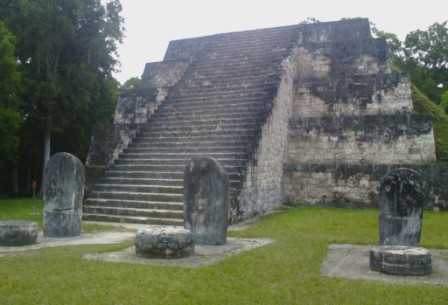
After crossing back into Guatemala we drove up to the famous ruins of Tikal. We had heard that a ticket purchased after 4pm was good for the next day, and also that it was possible to camp onsite – and it worked out perfectly for us! We were able to rent hammocks with mosquito netting, and they were set up for us in a wonderful site with a cement floor and a thatched roof, and we could drive the car right up next to it. We were able to enjoy almost 2 hours in the park before the gates were closed at 6pm. We considered paying for a guide to take us in early in order to see the sunrise from the top of Temple IV, and scouted that site out beforehand. We hoofed it to the far end of the park and climbed the wooden stairway (Kathy counted 179 steps) to a small platform near the top of one of the higest temples in the complex. We sat there for perhaps half an hour, watching dusk come over the park. We saw several spider monkeys swinging in the trees below, and heard a nearly continuous drone from howler monkeys. A coatimundi clambered up the steps, undisturbed by the group of tourists while he foraged for food. We left in time to exit the park, but noticed that the guards were not strictly enforcing that curfew. We spent our first night in hammocks, and it went well enough that we anticipate more. We recently purchased lightweight hammocks for camping, but they don’t have mosquito netting – yet! It was really nice to fall asleep to the sounds of the jungle nearby, and to wake up again with the first birdsong. We decided to forego the 4am start that the guided sunrise tour would have entailed, but instead to enter the park at the regular 6am opening time. The park was empty of people and full of wildlife – just what we were hoping for! We climbed a smaller but closer temple and ate a breakfast of cold cereal and reconstituted powdered milk. We loved watching the monkeys and birds moving around in the trees below us, and were especially thrilled at seeing three toucans fly by. At first it looked like they were carrying something large and heavy, like a banana, but then we resolved it to be the bird itself. After breakfast we wandered all around the park, probably somewhere around 8 miles. We enjoyed envisioning up to 100,000 people living in the area and what it might feel like to come to the big city for markets or holy days. We found the ruins of Tikal to be accessible, beautiful, wondrous, even magical, but by mid-morning we were wiped out and decided to head south to our next destination, Semuc Champey.

Dusk Settles on Tikal  Tikal Coatimundi  Camping in Hammocks

Breakfast Site  Tikal Pyramid

It’s hard to know how long it will take to travel through mountainous areas with winding roads, especially if they are not well-maintained. At first we had allowed two days to make this drive, but once we got underway we chose to keep on going. There aren’t many substantial towns along the route we took, and we ended up bypassing the most likely candidate in favor of a more direct route. It turns out that was not a good choice. 🙂 The mountains of Guatemala are breathtaking. After our visit to Tikal, we kept envisioning undiscovered temples under every hill, especially those that had white limestone visible! Perhaps the inspiration for the Mayan temples originated in a natural hill that provided a desirable place for a king to call home, and then another king had to have his custom built. We loved the cliffs and vistas and bridges that we passed. At one point in the mid-afternoon, though, the road suddenly went from reasonably paved to barely passable (without four-wheel drive). We passed only a few vehicles going in the other direction, mostly dirt bikes and pickups, with an occasional delivery vehicle. One motor bike that we passed was stopped while the two riders were trying to reattach the shifter that had broken off. Dan helped them get it back on using the handle for our jack as a hammer, and soon enough they were back on their way with a wave and a smile. The sun grew low in the horizon, and the road continued to be torturous as it wound through the steep terrain and through several Mayan communities – we were well off the beaten path (be careful what you wish for!). We were crawling along at less than 5 mph – so all of our previous calculations went out the window. As dark approached we discussed spending the night in the car, but it seemed like the end must be close. At one point a couple of young men flagged us down for a ride, and we took them a couple of kilometers. It turned out they were very drunk, but we had a fun if confused conversation. The more cogent (sober) of the two taught us two phrases in the local Mayan language, Q’eq’chi. (“Hello” is something like “chan-sha-quill”, and “thank you” sounds like “pon-ti-osh”.) While these phrases will be of limited use in our future, it’s nice to feel that we’ve at least made an effort to communicate with the locals in this area that we are so drawn to. After dropping them off, we kept on going, and the pavement resumed not much further. Rather than make the turn towards the original destination, which signage told us would be 11km on what looked to be more rough, rocky road, we went an additional 40km to the larger city of Coban. The paved road had lots of potholes, but at least they were dodgeable. It rained a bit along the way, and as the land cooled this moisture formed a low but dense fog, making it difficult to see our way around the field of potholes. Sheesh! We arrived well after dark and found a cheap place to crash, then retraced that path the next morning. We stopped once behind another vehicle that had encountered a rock slide in the middle of the road; it had apparently come down sometime in the night after we had passed by, leaving one lane closed off and a significant boulder in the middle of the other lane. By banging on it with smaller rocks, throwing slightly larger stones at it, jumping on it, and hammering at it with various tools, the group of six men was able to break off enough chunks that the remaining block could be slid to the road’s edge. Whew!

Guatemalan Hills!  Removing Rockfall

We encountered more off-road roads on the 15 miles to our destination, a hostel named Utopia. Along the way we had several tour operators call to us that the roads were too rough and we should take a tour instead. We kept postponing that decision until it was impassable, but we reached the hostel before that point. Arriving at Utopia was indeed a breath of fresh air. It has a wonderful open-air communal area for dining, relaxing, journaling, and viewing the amazing scenery in the midst of a very rural Mayan community. The workers at the hostel are largely volunteers who loved staying there so much that they’ve extended their stay by signing up. We hung out there the first afternoon, enjoying a short dip in the river just a 5 minute walk into the canyon. We met a delightful British couple and had dinner with them. Martin is Welsh and Jemma is from a town south of London, but they had both emigrated to Australia before they ever met. The next morning the four of us took a shuttle (actually a pickup with a frame of tall bars in the bed to hold onto while riding standing) to the primary attraction in the area, Semuc Champey, a series of about a dozen cascading pools carved into the limestone that has formed a bridge over a quarter of a mile long. Most of the water passes under the bridge but some pours through the pools. The waters are clear, turquoise and cool. There are a number of places where one can jump from one pool into the next one down, ranging from 1 foot to at least 15. The shuttle bus dropped us off half a mile before the pools, and we walked the rest of the way, beginning with a large bridge with sketchy timbers. Apparently lots of adrenaline junkies enjoy jumping off this bridge into the clear running waters below, but we did not take that path. 🙂 We continued up the road to a path that led up the canyon about 1000 feet to a magnificent overlook. The path was largely carved into the stone of the cliff, and quite steep, but there were Mayan families, some with small children, that had come before us carrying bottled water and fruit to sell. How could we say no to everyone?! The watermelon slices were actually slices of heaven. We enjoyed the view for quite a while before deciding that it was time to descend to the pools. What a lovely way to spend the day! After we’d had our fill of nirvana, we walked the 3km back to the hostel, stopping at a stand to get a bite to eat. The walk back took us through some working fields and we felt we had indeed found the “heart of Guatemala”.

We Found Utopia!

Wanna Jump?  Semuc Champey

Jemma and Martin were planning to head north to Tikal next while we were planning to head back home, via the nearby Mayan town of Lanquin. We enjoyed our day with them so much that we talked them into delaying their departure one more day, and riding to Lanquin with us. It wasn’t terribly hard. 🙂 Although the road was still rough, knowing that we had already passed this way made it easier. We arrived in Lanquin in short order, but had to stop at a couple of places before we found one that had room for us. We ended up in a luxurious place called The Oasis, with bungalows scattered on a tall grassy hill over a bend in a nicely-flowing river. We got the last two available cabins – whew! After dropping our stuff in the rooms, we took a dip in the river, although it was cold enough that not all of us got all the way in. 🙂 Martin, however, took full advantage of the trapeze swing! Then we got a bite to eat and went off to explore a nearby bat cave. We paid the admission price, waved off the guide who wanted to show us the way, and followed the well-marked but steep and slippery path in. A good sized river gushed out just below and to the side of the cave entrance. We had three flashlights among the 4 of us, so we were fine, if a bit slow. Just before dusk a dozen or more others arrived to catch the show. We spent probably close to an hour watching the bats emerge, first in ones or twos and later in a constant stream. We never saw the end of the stream, but read somewhere that there are about half a million of these tiny guys. They zip close to your face or shoulders, never missing a beat!

Lanquin Bat Cave

After seeing our friends off in the morning, we hopped into our trusty Mitsubishi and headed back towards home. We drove through a variety of ecosystems that day, from lush green mountains to dry desert hills to thriving farms. The crossing from Guatemala to El Salvador went so smoothly that we thought we must have missed something. We spent a night in a cheap hotel in Santa Ana, watching a huge impressive lightning show as a deluge of rain washed the road off our car. In the morning we came the rest of the way back to the boat and are now settling in for a few days before our next adventure begins. Wow, what a trip it’s been!

Posted in Uncategorized | Comments Off on 7-28-2015 – Costa del Sol, El Salvador and a Visit to Honduras, Belize and Guatemala

7-3-2015 – Bahia del Sol, El Salvador and a Drive to Nicaragua

We’ve had another eventful month. A minor but life-changing event is that we bought a portable air conditioner – one which gets reasonable gas mileage, and came with four wheels and seating for five at no extra cost. 🙂 Dan had spent a good bit of time searching on the internet for vehicles for sale, and we’d even gone into San Salvador to look at one – which turned out to be a real beater! Ultimately we found one that met our eeds by networking. The day we were in San Salvador looking at that car, we hopped on a bus and in a city of 2 million ran into one of the only two people we know in the city. She offered us the names of two of her friends who sell cars, and the rest as they say, is history. We got a 2006 Mitsubishi Lancer, a surprisingly popular car here. We paid $4500 which we hope to recoup when we sell the car as we leave El Salvador next spring. We’ll pay about $350 for insurance for the year, which includes roadside assistance and is effective in El Salvador, Guatemala, Mexico, Honduras, Nicaragua, and Costa Rica. Belize and Panama require insurance from a domestic company. We put new tires on it immediately, replaced the broken tail light lens, and identified a few other relatively small items that need attention. All in all we’re pleased at the new addition to our family.

Our "New" Car

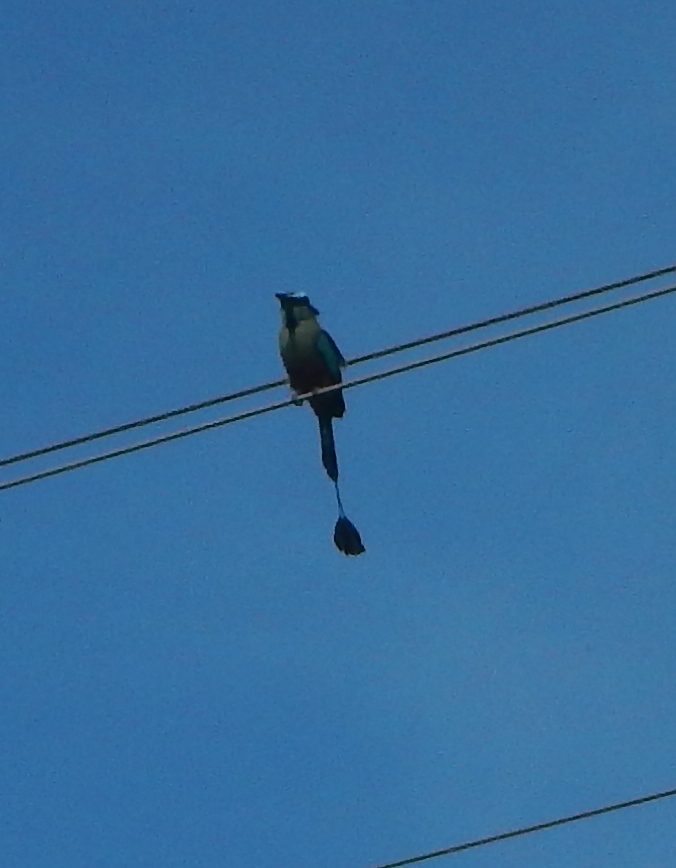
Before the paperwork all went through, though, we wanted to go on a driving trip but couldn’t leave the country with temporary documentation. So we went to another corner of El Salvador that we hadn’t yet seen. We crossed over a beautiful mountain range with several volcanoes to get to the southeast corner of the country and stopped for the night in a very sweet town named Alegria, with a population of maybe a couple of thousand and elevation around 6000 feet, which seems to be a happy place indeed. The town square was full of birds singing and kids playing. We spent a pleasant evening wandering the town’s streets and enjoyed an amazing lookout point where we saw a constant play of lightening over the nearby valleys. Found a great little B&B called Entre Piedras; we recommend it. The next morning we drove a few hours and visited the “other” resort in El Salvador with a marina, Barillas, where we almost took Lungta when we first arrived in El Salvador. We didn’t have very good directions about how to find it, but sleuthed it out using clues from the Lonely Planet, other cruisers, and our GPS-equipped tablet. We turned off of the highway onto a dirt road and began heading in the direction we thought it would be. When the road took a sharp turn to the right, we asked some guards at a gate for a sugar cane plantation whether we were in the right neighborhood. They said to come on through, that the resort is on the other side of this huge plantation, and we should follow the signs with “flechas” (arrows). We traveled about 7 miles on a bumpy, dusty dirt road, through a working plantation complete with farm hands on bicycles and dilapidated housing, eventually coming across another gate with another guard – and a sign that said Barillas! (We saw a torogoz, El Salvador’s national bird, while on this drive. This also happens to be Nicaragua’s national bird, but they call it a guardabarranca. English speaking birders call it a turquoise-browed mot-mot.  See the cool tail?  That’s how we recognized it.) Barillas is a beautiful resort out in the middle of nowhere. They are on a loop of a big estuary, which is populated with mooring balls, but not many boats. Their grounds are immaculately tended, and the whole place has a tranquil, luxurious air about it. We talked with the manager for a while, and learned more about the marina. Although it would be more expensive for us to stay there (because paying rent on a mooring ball is always more costly than anchoring for *free*. 🙂 ), we got excited about possibly spending some tranquil time there some time before we leave El Salvador. We asked about the boatyard that we had heard of nearby, but she told us that it was changing ownership and was closed while the new owners worked on getting the appropriate permits. That was disappointing to us because we haven’t hauled the boat out for painting in a couple of years, and it’s getting to be time.

Torogoz, by Any Other Name

On the way back home afterwards, we drove through the small city of Usulutan where we had heard there was a chandlery (a boaters’ supply store). We were looking for some “sacrificial anodes” aka “zincs”, used to protect the boat’s metal parts from electrolysis while in salt water, and although they didn’t have any, they told us there were 30 large zincs at a sister store in Puerto El Triunfo, a tiny town not too far away. Zincs are needed on every vessel that sits in salt water but we have difficulty finding large enough zincs for Lungta, so we often try to look where there are large fishing vessels. Finding this town was a story in itself, but we ultimately got there and found our zincs. Since this was a port town, we took a stroll to see the water, and while we were wandering the dock we saw what appeared to be a boatyard a few blocks away. So we drove around town to see if we could find it. It wasn’t immediately apparent, but we knocked on a gate that had a “We sell ice” sign posted, and learned from the guard that it was indeed a boatyard. In our limited Spanish we explained that we were looking for a place to haul our boat out and asked if we could talk with a manager or boat captain. After a few hurdles we found ourselves driving across the yard of this large but now defunct operation. We were shown to the office where a nice young man who spoke flawless English answered all of our questions. Jonathon was the heir apparent to this boatyard that doesn’t currently have a lift of their own, but uses one on the other side of town. He called the owner of that yard and arranged for us to drive over and meet him. But Manuel didn’t speak any English, so our conversation was limited. He quoted us a reasonable rate, though, and we came away encouraged that we might be able to get Lungta out of the water while we repainted, talking all the way home about just what this would require. The yard was extremely rustic, to be kind, (rusty and decrepit if you’re feeling less generous) and it would be a challenge for all involved to pull this off.

When we returned after only being gone 2 1/2 days, we were disappointed to see that the boat didn’t fare as well as our previous 2 week trip. This time the weather had been overcast and rainy, so the solar panels were unable to keep the batteries charged. Fortunately we hadn’t been gone long enough for the batteries to drain completely, and the refrigeration was not yet at room temperature. We turned on the generator and were good to go. But it means that we need to continue working to reduce our power consumption if there’s any risk of cloudy days. Also, we had left our dinghy tied up to the dock, as usual, but found that it was quite full of water. It also hadn’t sustained serious trouble – i.e. sinking! – but it set our minds to thinking about how to prevent future mishaps if we’re gone during a rainy period. Perhaps a cover to slough off the rain…

We spent a few days at home before heading back out on the road. A friend of ours arrived at the airport for a 9-day visit. We met Joan and her husband David a few months (and nearly a lifetime!) ago at the Chiapas Marina in Mexico. Their trimaran is in storage there while they decide what to do with it, now that they’ve purchased some land and built a house in Ecuador. While David is occupied in Florida, Joan decided to take us up on our invitation. We’re glad she did! She arrived at the airport midday, and we gave her a choice of whether to go on a roadtrip or to hang out on Lungta – or both! She was flexible, so we set off for unexplored points east: through Honduras and into Nicaragua.

It took a bit longer to get there than we’d expected: the better part of two days. We took a southern route rather than the more heavily frequented Interamerican Highway, enjoying the changing scenery. While El Salvador was mostly canefields, Honduras had lots of fields with grazing cattle. We saw lots of horse-carts and even ox-carts in use. The inland mountains changed character from region to region, with some having rounded tops and others being craggy, but virtually all are heavily covered with vegetation. We ended up regretting taking this route for several long stretches that were full of deep potholes. I’m talking about some really serious potholes! For 50 miles we traveled at 20mph on a road designed for 60mph. Most of the other traffic was tractor-trailer rigs – try dodging potholes driving one of them! We were tickled when we saw a number of small groups of young men each with a 5 gallon bucket and a shovel, with their hand outstretched, asking for donations to support their efforts at filling in the potholes with some dirt – Kathy noticed that they all happened to be stationed under big shade trees. 🙂 Each had filled in the potholes in a 50 to 100 foot stretch of road, leaving the sunny 98% of the roadway covered with potholes large enough to swallow the entire front-end of our car and deep enough to break an axle.

Dragon Trees Lining the Road  Cliffs and Greenery  Cattle in the Road

This was our first time crossing borders by car, and we had a few “adventures”, from which we hope to learn a lot! The first border was into Honduras from El Salvador. Apparently we missed a turn (saw it later when we came back home), that separated the cargo trucks from the passenger vehicles. The sign was off to the side and largely obscured by a big bush, and it used a term that wouldn’t have been familiar even if we had seen it: livianos, which means “frivolous, fickle, lewd, light”. Hmmm. At any rate, we should have gone that way but didn’t, and we ended up having a tricky time crossing the border along with dozens, perhaps hundreds of semis and flat-bed trucks. Half a dozen “agents” crowded around us to “help” us navigate the process. They never really offered to help, but just jumped in and demanded passports and began filling in paperwork. Resistance was pretty futile, although we tried. 🙂 Somewhere in the mess, a miscommunication happened and one of the border guards got upset when he thought that we didn’t have the proper papers. (If you’ve been in the country for more than 6 months, you need to get a local driver’s license rather than use the one from your home country. He thought we had been in El Salvador for 10 months.) He tried to charge us $50 tax to cross but we refused to pay it. We said we’d just go back to El Salvador, but the guard said we couldn’t turn back – and we were at a stand-off. Eventually things got straightened out (largely due to Joan’s calm presence, I believe), and we were on our way without having to pay the charge after all. We did pay a $5 “tip” to one of the agents for arranging for us to cross over from the freight side to the passenger side, but that was nothing if it meant that we could be on our way again! The crossing from Honduras into Nicaragua was less chaotic, but only slightly so, and we were careful not to let the “flies”, as we were calling the agents, create trouble.

We overnighted in Leon, a beautiful city in southwestern Nicaragua. The town square is ringed by horse-drawn carriages offering to take passengers for a romantic tour of the town. We had dinner at Cocinarte, a wonderful restaurant that serves a very international variety and understands vegetarian sensibilities. Kathy and Joan both enjoyed Indian food while Dan selected a falafel plate. No one was disappointed! The next day we moved on to Granada, passing through the capital city of Managua, which has an interesting series of artistic, bright yellow, metal trees lining one of the main boulevards. We got caught in a nefarious traffic stop, where dozens of cars and trucks were being pulled aside for ticketing as they came through a traffic circle. It wasn’t exactly clear what our infraction was, but it had something to do with which lane we were in as we exited the circle. We paid our fine directly to the policeman (probably somewhat higher than standard 🙂 ), in order to avoid his keeping Dan’s driver’s license until the next day. Argh! It was a relief to get back on our way, and on to Granada, a city that reminded Kathy of Antigua, but on steroids. There were lots of tourists, lots of hostels, lots of cars. The city had some pretty character to it, but it was overshadowed by the frenetic pace.

Leon's Square  Managua's Trees

The next morning we went off in search of the Pueblos Blancos, which are known for their artisan markets. We drove through some pretty countryside, circling a very round lake that was an old volcanic crater. We spent most of a day in a town called San Juan de Oriente that was a ceramic center. There was an annual artisan fair going on in the main street and dozens of ceramic studios on the cross-streets nearby. We spent a few hours browsing through a number of the studios, as well as a store run by the town’s co-op which had pieces from a number of artisans. Joan was looking for a few decorative items for her home, which is still in the process of being finished. They don’t yet have electricity, so they use candles at night. She bought a couple of pieces designed to go over a candle and add sparkle as the light flickers through lots of small holes. Some of them were designed so that you could hang them from the ceiling, while others were just intended to sit on the table. We bought a couple of nice pots for two corners of our home that “needed” sprucing up.

Ceramics in San Juan de Oriente

After we were shopped out, we found a road that wound down to the water’s edge of the lake, which was called Laguna de Apoyo. There were half a dozen hostels, but most were already full. We stayed in a very rustic casita that was available from the last of the hostels in the row. This hostel is part of a project to raise money for local educational units. It attracts a lot of young travelers, and there was a swirl of pleasant energy all about the place. We walked across the street and down to the lake for a short swim just about the time a small troop of monkeys moved through the trees overhead; we were told that they were howler monkeys – how cool is that?!? They were climbing around in the mango trees, nibbling on the fruit and throwing the rest down to the ground – watch out! We had dinner at a little restaurant down the street with a nice couple from Holland. When we got back to our room, some wildlife had moved in. We had to convince a couple of spiders to move on, and there was a very interesting, kinda scary, insect wandering around underneath the desk. It was like nothing we’ve seen before and we’ve been unable to identify it with online tools. It seemed like an insect, with six long legs, about 3″ each, two antennae, and perhaps another pair of arms near the mouth like a praying mantis. It had a shiny dark body like a beetle, but rather triangular. The long legs and the way it scuttled sideways were reminiscent of a crab. Kathy tried to shoo it towards the door but it went the other way. Fortunately (?) it ran under the door into the closet, which was locked. So Dan shoved a towel into that crack and we slept comfortably in the knowledge that it wasn’t going to crawl in bed with any of us. Whew! We were woken up early in the morning (or was it late at night?) by an unusual sound that could only be the howler monkeys. We didn’t all agree about what the sound was like, but we were all in agreement that it was surreal! We left the room to the wildlife the next morning and moved to a different hostel down the road. This place had a very interesting room that had two tiny private swimming pools inside; one was a Jacuzzi and one was cool. Two walls of the room were open to the sky and had an amazing view of the lake (while still offering plenty of privacy). There was a hammock strung between two of the building’s structural poles, and a nice patio set offered plenty of seating to enjoy the scenery without ever leaving home. There was mosquito netting over the main bed, adding to the luxurious, romantic feel of the place. But, as with many developing world experiences, the fancy is mixed with the shabby: the Jacuzzi jets weren’t working, there was no mosquito netting on the second bed, the stone floors and walls were hard to clean and had collected a significant layer of dirt. We spent more time playing in the lake, much of it on a floating platform 50 yards from shore. In the evening we saw a number of bats flying around, including circling around the posts of our room, and in the morning Dan noticed a dozen or so clustered on one of the ceiling joists. The mosquitoes were voracious, though, so we think the bats aren’t eating quite enough.

Monkeys Overhead  Raft Platform  Our Room

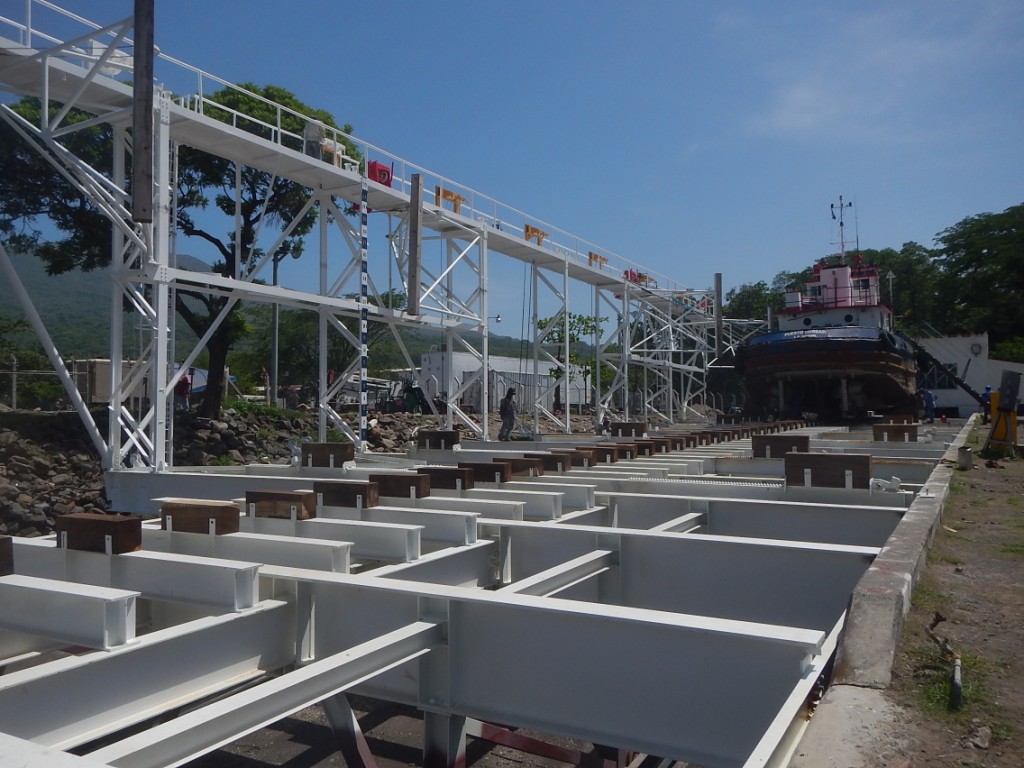
Our drive back to El Salvador was much easier than the way out, partially because of the experience we’d already had and partially because we took a different, more well-traveled route. The only hiccup was that we had lost one of the visa papers as we crossed Honduras and had to rely on the leniency of the immigration official to go through without substantial penalties. (He told us that normally it should cost $180, but he waived it since we had the other two and our passports also supported our story.) Once we got back in El Salvador, we hugged the coast, traveling south around the edge of the Gulf of Fonseca to the town of La Union, where we’d heard that there might be a second boatyard worth investigating. Dan called a guy who had recently opened a small marina and asked what he might know, and Giovanni helped arrange for us to meet with the manager of a yard that has done a lot of work with the Navy and wants to increase his clientele of recreational boaters like us. We drove about 10 miles to the facility, Puerto CORSAIN, and took a nice tour and had a great conversation with Leopoldo. This place has recently had a big facelift and it looks beautiful. They had a 50 ton boat on the rail being worked on, so it was easy to imagine our own boat there. Now we’re all excited at this possibility! It looks like they can easily accomodate our weight and size, and we’re working with Leopoldo to get a quote and come up with a schedule – look like there’s more work coming up!

Puerto CORSAIN's Railway

After that journey, we spent 2 more days with Joan, mostly quietly hanging out at Lungta or by the resort’s pool. We had lots of pleasant conversation, a few nice meals, and a relaxing time. It was good to get to know her better, and we look forward to meeting up again. Joan and David have invited us to visit them at their home in Ecuador, and we’re seriously considering that! We might combine that with a visit to Peru, but this is the stuff of future blogs – stay tuned!

Posted in Uncategorized | Comments Off on 7-3-2015 – Bahia del Sol, El Salvador and a Drive to Nicaragua

5-25-2015 – Suchitoto, El Salvador & Guatemala’s Western Highlands

We just got back from the first of what promises to be many land-based excursions into Central America, and possibly some of South America, using Lungta as our home base. We were gone two weeks on a whirlwind visit to Suchitoto, a town in western El Salvador, and a few highlights in Guatemala’s amazing Western Highlands. We saw a lot, learned a lot, and got back just in time for Keith and Wayne to catch their flight back to Boston.

Suchitoto is touted to be the artistic capital of the country, and home to a somewhat more sophisticated and sensitive population. A few people “on the dock” had gone birding there, reporting beautiful country. We followed their footsteps and ended up staying at a hostel run by the same guy who led their bird-watching tours. Sounds like quite a coincidence until you see how small this town is. It’s very cute, but to call it the “capital” of anything is an exaggeration. El Gringo hostel is written up in Lonely Planet, and the proprietor Robert is an influential force in the gringo tourist market here. Although he grew up in the States, his mother is El Salvadoran, and he returned to her homeland to find that it really called to him. He now has a family here and has made a real place for himself in the community. He graciously gave us a local perspective on the issues facing the region, some of the projects that he’s participated in to help address them, and useful info about a couple of waterfalls in the area that might appeal to us. We decided to go to the one called El Cubo, because it was relatively close to the hostel. We “just” had to walk down the street until it left town, keep on going down the hill until we hit the stream, and then turn upstream until we got there. Simple, right? The trail we took became barely visible as it meandered through the woods. By the time we dropped 500 feet into the bottom of the canyon and arrived at the stream we were much further downstream than expected. Our total time to get there was somewhere over an hour, although we’d been told that it would probably be around 30 minutes. Oops! The area was beautiful, although heavily littered with a variety of plastic obects. We all enjoyed the outdoors time. The waterfall at the end of the trail was in a box canyon, with steep cliffs on all sides, and only a small entrance through which we approached. The water was quite dark and murky; visibility was about 6 inches. There was a good bit of vegetation growing overhead so it was fairly dark and we were tickled when a flock (?) of dozens of small bats flew out of the entrance, startled at our noise. A bit later another, a smaller flock followed – and we all kicked ourselves for not being ready with a camera. You’ll have to take our word about them! There were two pools, with a 5 foot drop in between. Keith and Wayne clambered up to the main pool, and Kathy followed while Dan chose to explore downstream a while. After a short break we all put our shoes back on and made our way back downstream. We all kept our eyes peeled for a closer path back up the bank and took the first usable one. We made it back to the hostel in about half the time by cutting through a cow field. We were tired after our day’s hike, though, so we decided not to do the other waterfall which we had heard was likely to be dry.

Suchitoto's El Cubo Waterfall

Robert told us that we would not be able to catch a bus directly from Suchitoto into Guatemala, that we would need to return to San Salvador and get a regional bus from there. He also said that we would need to purchase a ticket a day in advance rather than immediately before leaving, so we’d need to spend another night in the big city. I guess we still have a lot to learn about traveling the world by bus! Given this additional information we decided not to spend a third day in Suchitoto, but to get started on the next part of our excursion. We hopped on a local bus back to San Salvador and made our way across town to the Occidente (west) bus station, where the Tica buses stop. We bought tickets for the next day and spent the night in a hotel next door which offered a discount for ticketed passengers (Meson de Maria). They even knocked on our doors early the next morning.

It was a four hour bus ride from San Salvador to Guatemala City, through spectacular green countryside. Much of Guatemala is covered with steep hills, making for twisty roads. These are the Western Highlands, and this is the main area that we wanted to explore on this trip. It turns out that the area is huge, and we only scratched the surface. We went to the major tourist destinations: Antigua, Chichicastenango, and Lake Atitlan. This was not a bad place to start – after all, there’s a reason that these are such popular places – but we want to spend more time in these same areas, going further afield. Dan and Kathy are both fascinated by the indigenous Mayan people who live throughout Guatemala. They have retained their language, clothing, and many other practices, unlike in El Salvador where it was dangerous just to be “too” short during the civil war. People learned to downplay that heritage or they were killed. We want to visit some of the outlying villages where they actually live, rather than just the places where they come to sell their wares to tourists.

In Guatemala City (Guate to “those who know”, and just “Guatemala” to many locals) we had a Couchsurfing host lined up, thanks to some dedicated internet time by Wayne and Keith. It turns out that there are not as many active Couchsurfing hosts in Central America as other places they have traveled, and it was more difficult to find hosts than they had expected. Axel is a really nice guy who offered to take us in for a couple of nights and then Esteban, a neighbor of his, offered up another bed to split the “burden”. Axel is a young professional in the financial world, while Esteban is a second-year medical student. We had heard a number of warnings about Guate being a dangerous city, so it worked out nicely that we had someone with local knowledge to show us around. Axel took us all to a nearby mall where we got yummy pita sandwiches from a stand, which we ate while sitting on a tall set of stairs with a beautiful nighttime view of the city. Dan & Kathy spent the night with Esteban, while Wayne & Keith stayed with Axel. We had a pleasant evening talking with Esteban, touching on some very important topics mostly related to the transition from youth to adulthood. Esteban lives with his older brother who is studying architecture but was out of town for a couple of weeks during his school break. Their parents are paying for their school and room & board, so although they live on their own, they are also still under the wings of their original family. He is in an exciting and also challenging time in his life, and the passions of the age were interesting to see afresh through Esteban’s eyes. He typically allows himself Fridays free from his studies, but Saturday he hits the grindstone again, so when we got up in the morning we joined the guys at Axel’s apartment.

Axel showed us a bit of the town that next day, in particular the big artisan market and the town square. There was a big protest brewing in town for that afternoon, and we saw people beginning to arrive at the square and set up banners. The mood was one of anticipation rather than fury, and a number of people had small children with them that were playing with the pigeons or running around the fountain. Later we heard that there were more than 50,000 people from around the country and even a few satellite protests at Guatemalan embassies around the world. The vice-president had resigned in a corruption scandal, but people want more fundamental change. There is a lot of inequity in the country between the haves and have-nots, and the rampant corruption among government officials serves to widen that gap. There is a big election coming up in September, and we saw lots of political billboards and other advertising everywhere we went. That evening we went to a Couchsurfing event at a bar downtown, an opportunity for local Couchsurfing members to meet one another, and also any visitors that happen to be in town. Roughly 20 people showed up, offering quite a test for our conversational Spanish, as well as everyone else’s conversational English! It was a pleasant evening, and we may have made another contact or two.

Guate's Square

After breakfast the next morning, Axel was driving us to the bus station to head to Antigua, when he made a spontaneous decision to drive us all the way to Antigua. It’s about an hour and a half, so he was able to spend the afternoon with us before heading back to Guate in time to get enough sleep for work the next morning. We found a hostel to drop our bags and wandered the town for a short while together. Oddly, we got separated in the town square when a woman selling textiles stopped Kathy & Dan for a few minutes. By the time we got away, the others were nowhere to be seen. We had been heading towards the ruins of the original cathedral, just behind the current cathedral, so that’s where we headed to try to reconnect. We bought entrance tickets and strolled around the area for 10 or 15 minutes. The original cathedral was built in the mid-16th century but was destroyed by an earthquake a century later, then rebuilt and destroyed again in 1773. At this point, the government relocated the capital to where Guate is now, reconstructing as much of the original city as possible, even relocating important parts of important buildings, so the new buildings are not as ornate as they were originally. There are numerous ruins scattered around the city which still show the devastation of the 1773 earthquakes. Some of them have been excavated, a few restored, but many just abandoned. It was a little eerie, thinking of what it must have been like 250 years ago, when the ground shook loose huge blocks of stone from all the buildings. We checked back at the square and the car and the hostel, but couldn’t find the guys anywhere. It turned out that they were in the cathedral ruins when we were, tried unsuccessfully to catch our attention, and then disappeared into a crypt for a few minutes at the time we happened to leave. We ran into them again later that evening, after we went out for a bite to eat. Axel is a huge Brittney Spears fan, so he was delighted that the Billboard Awards were showing that night, and we watched the show on a tiny television in a small hostel room in the old capital city of Guatemala – dubbed in Spanish!

Manuela

Antigua's Ruins  Overlooking Antigua

We absorbed the city over the next two days. One day Wayne and Keith took a tour to a volcano about 2 hours away and hiked to a lava flow where they were given marshmallows to roast. 🙂 We chose to spend that day in town; we hiked up a nearby hill with a spectacular overlook. As it turned out, this was a good choice because Dan got sick. His was the first in a series of fevers and malaise-y days to dog our group the rest of the trip. Another day the 4 of us took a shuttle from a fancy hotel with a wonderful grounds full of restored ruins up to a location on another nearby hill which has been developed into an interesting multi-use facility.  They have commissioned a lot of art from mostly local artists, there’s an aviary, a zipline circuit, a chapel, some conference rooms, a playground, etc. Dan and Kathy both loved the town square, and spent a good bit of time just hanging out there watching life go by. There are lots of Mayan women walking around selling homemade products, mostly textiles. We had more tablecloths, scarves, and friendship bracelets offered to us than we could count! We bought a few items during our visit in Guatemala, and just plain gifted some money to several of the women who shared their stories with us. Life as a Mayan is difficult in Guatemala. They work hard to feed their families and have little support from the government in terms of education, healthcare or housing. There was a small protest in the town square one day, but we had a difficult time understanding exactly what was going on. There was a guy at a lectern with a microphone addressing a crowd of Mayan people, 80% women, but it didn’t seem to be much of a dialogue! The banners the women were holding mentioned government corruption, lack of services, high taxes, fees for the municipal market, etc. Protest in Antigua's Square

The next day we got a bus to another town called Chichicastenango, or “Chichi” for short. This is a smaller town with little tourist presence, except for during a very well known market, held every Sunday and Thursday. Tourists come on tours from Guate, Antigua, and other places just for the market day. We had read that showing up the day before and watching some of the process of setting up the booths would be interesting, so we arrived on Wednesday afternoon. Kathy got feverish on the second half of the bus ride and was weak the rest of the afternoon. We sat on the steps of a church while Dan went off in search of a hotel, along with some assistance from a self-appointed local guide. Tomas was anxious to make himself indispensible, but offered a lot of information that was obvious. (This is a church, that is a restaurant.) He did help us to find a reasonably priced hotel, but became a bit of a nuisance the rest of our visit whenever we would hit the streets. He represented a few cafes and clothing stands as his own, but then didn’t seem to know when they would be open or would rush to make sure that the salesperson knew that he had brought us in. We loved strolling the streets and market and grabbing a meal at a stall for the locals in the food court. The next morning, we hiked up a nearby hill with a Mayan sacred place on it.  It had a collection of stones, some of them carved into crosses, that were used for sacrifices to foster abundance in the coming season.  Later we groaned a bit when we saw a bunch of people who were clearly tourists with huge telephoto lenses on their fancy cameras, standing head and shoulders above the market crowd. Fortunately we were ready to be on our way.

Setting up a Booth in Chichi  Chichi's Church Steps  Pascual Abaj near Chichi

Wayne and Keith had identified another Couchsurfing host who lives near Lake Atitlan. Although we had not been able to find a date that worked for all of us, he was coming to Chichi and was happy to drive us the hour-long journey back to his town 5 miles from the lake. Dan and Keith rode in the back of the pickup. Esau already had Couchsurfing guests, two girls from Germany, so he couldn’t accommodate four more of us. However we spent the afternoon with all of them, enjoying brick-oven-baked pizza at his restaurant, before catching a local bus down to the town of Panajachel on the lake. We happened to meet an American woman who showed us to an inexpensive nearby hostel and we were in business!

The next morning we hopped on a small panga-like boat that is used for public transportation. These boats leave every 20 minutes and hop from one village to the next, covering about halfway around the lake counter-clockwise. It costs a little more than a dollar to go to the next town, and about $3 to go from the last town back to Panajachel, the largest town and economic center of the area. There are also a few towns on the other side of the lake that we didn’t get to this time, but we’re just saving things to do the next time. 🙂 We took the boat to the dock for the first town, Santa Cruz La Laguna, and then walked half a mile up a steep hill to the town itself. It was quite a trek! Then we looked around the town square, bought a few bags of water, and trekked up another half a mile. Santa Cruz is built on the slopes of a canyon and is incredibly vertical. We were wandering through a residential neighborhood, and came across a group of 4 or 5 women who were loading 4 cement blocks onto each of their backs and carrying them even further uphill! Dan and Keith couldn’t resist the challenge, so each of them picked up 2 blocks and joined the women. Wayne and Kathy were both still ill and it was all they could do to haul themselves up. 🙂 We went perhaps a quarter of a mile and reached a house that the family was building on an extension to – with an amazing view of the lake. They were appreciative of the help, and let us come in and look at the project. Then we headed back down the hill and turned towards the next town. Someone told us that it should take about 40 minutes, but again we took far longer than expected. I guess we’re out of practice or something. The path varied quite a bit, from a rough forest trail to the paved entrance to a fancy guesthouse, from flat across a schoolyard to steep rocky cliffside. It was actually quite a spectacular trail. Finally we arrived at the next town, Jaibalito, but didn’t have much energy left to really explore it. We picked up the next boat and hopped around to the 4th town, San Marcos La Laguna, where we got lunch at a really sweet little restaurant that actually had tofu and tempeh! This town is known for attracting spiritual, energetic sorts, and we saw lots of signs and flyers advertising massage, reiki, meditation, etc. We extended our lunch a bit to wait out a midafternoon thundershower, and then ventured back to the boat. Although there were a couple more towns on this side, the boat tours stop at 5pm, and we caught the penultimate boat back home. We spent the rest of the evening strolling the streets of Panajachel, which is very full of international tourists. It’s busy but upbeat, fun in small doses. 🙂

Lago Atitlan  Carrying Cement Blocks in Santa Cruz

We were all moving slowly, mostly because of the lingering illness in our group, so we don’t have much to tell about our last day in Pana. We got a bus the next day back to Guate.  One sobering moment occurred for all of us when we passed another local bus which had flipped on its side causing the roof to crumple.  The police were there and passengers were already taken away, so we don’t know whether there were any (serious) injuries.  Things like this cause one to ponder the fragility of life.  Axel picked us up at the bus stop, and it turned out that he was sick too, so we just picked up a pizza on the way home (Domino’s, ugh!) and made a quiet night of it. The next morning we got a cab to the Tica bus terminal (which is completely under construction – it was absolutely ridiculous that they were already using the new location with all this heavy work being done all around!) and took the bus to San Salvador. We stayed in our now-“usual” hotel, the Villa Florencia. There was one glitch: they didn’t have any rooms with two beds and they didn’t want to rent a room with a single bed to Wayne and Keith. So we ended up with a room with three beds – for less than two rooms would have cost. That left a little bit of a bad taste in our mouth, but we got a good night’s sleep which was what it was all about! We enjoyed street food that evening and licuados (fruit smoothies) for breakfast, and then made our way by local bus back to Bahia del Sol. Keith and Wayne got right to packing, while we got to unpacking. 🙂

DSCN2000

We were thrilled at the state of the boat when we returned. We’ve been concerned about the ability of our power system to be self-sustaining, mostly because of the constant large draw from our refrigeration. We recently installed a couple of timers (and relays!) on both the refrigerator and freezer circuits, preventing them from cycling for several hours each night. We wake up in the morning with a bit of water accumulated in the fridge from the melting of the day’s accumulated frost, but the frost comes from the moisture in the air which only enters when we open the fridge. If we don’t open the fridge during the day, then no additional frost/meltwater accumulates, and everything is fine. Our batteries were completely full, and the temperatures in the fridge and freezer were both in great shape. (Oddly, the next day the generator didn’t start. At first we thought we had a dead battery, but it turned out to be a connection problem, which isn’t directly attributable to being idle for two weeks.) This was a huge relief for us! Now we will feel more comfortable making longer excursions further and further afield over the next year.  It’s good to be home – and it’s nice to know that we can head back out again without significant preparation!

Posted in Uncategorized | Comments Off on 5-25-2015 – Suchitoto, El Salvador & Guatemala’s Western Highlands

5-11-2015 – Bahia del Sol, El Salvador

After traveling in Mexico for three and a half years, we now find ourselves in a new country. It would be easy to think that El Salvador and even Central America in general are just more of the same thing, but we’re already finding numerous differences that remind us that we have begun a new adventure.

Raising a New Flag

Crossing the bar into Bahia del Sol was a big decision for us, and one that we initially said we wouldn’t even consider. There are two estuaries in El Salvador where cruising boats can pull in out of the Pacific and stop for an extended stay: Bahia del Sol and Barillas. As with most estuaries, both of them have a bar that must be crossed before entering the protected waters, formed by the accumulation of sediment that gets washed down the river. Because of the shallow water, the waves break for quite a ways out, but the locals have figured out how to get around them. In Barillas the technique involves going parallel to the waves between two sets of them but never crossing any breaking waves, while in Bahia del Sol they take you across the breaking waves, timing the event so that it is manageable. Barillas is a resort with an airstrip and hangars, accessible by land and sea but not on a major thoroughfare (read paved road), and Bahia del Sol is a hotel with a small marina located on a regular bus route. Both have mooring balls available for a low/reasonable price and offer access to the hotel’s facilities (pool, wifi, restaurant, dinghy access, garbage disposal, laundry, etc). There is no marina in Barillas, which is not a problem for us, but might be for many smaller boats that need the electricity and/or water. There is a small haul-out facility near Bahia del Sol and a large one suitable for the local fishing fleet in Barillas. There is an organized event, called the El Salvador Rally, which brings dozens of boats to Bahia del Sol each spring and a community forms around that group, while Barillas remains well off the beaten path. The biggest item on the scales for us was the entry, so when Dan started to hear that there were times when the entry to Bahia del Sol was actually flat and we wouldn’t have to go through breaking waves, his ears really perked up. (Kathy remained skeptical until the very end. 🙂 ) We agreed that if the entrance was out of the equation then the accessibility of Bahia del Sol to the airport and its boating community made it more attractive than Barillas. Bahia del Sol is about 35 miles west of Barillas, so we would arrive there first. We decided to wait until we arrived at Bahia del Sol and could see what the specific local conditions were before making the choice. If conditions were not favorable then we’d continue down to Barillas.

The two other boats that were traveling down at the same time as we were both had guests arriving within a week of our arrival at Bahia del Sol, so they had a schedule to keep. Bob on Nirvana generously kept an eye on the weather in the area and provided all of us with updates on the tide schedule and the weather forecast. Fortunately the weather was completely benign, so there wasn’t much to warn us about! However, we were moving off of the new moon, which meant that the higher tides were diminishing. We left Chiapas on Monday, but then learned that if we didn’t arrive by Friday we might need to wait three more weeks until the tide was once again high enough to allow us to cross the bar. Although we prefer to sail as much as possible, this kind of schedule is enough to motivate us to motor partway whenever the winds are too light. We all three arrived in time for the Thursday evening tide. The marina sent out their pilot boat (along with Bill, the leader of the El Salvador Rally and an all-round competent person) to guide all of us across the bar. Isleña went first. Although there were waves breaking over a huge area, the pilot boat came straight through a gap in them. Using the VHF radio, they helped Isleña to get positioned to follow that same gap and then to identify a smooth(er) time to begin the passage. We all expected a much longer journey through the breakers than it turned out to be. After only a couple of minutes of tension, Isleña was greeted with “Bienvenidos a El Salvador” and told to proceed into the estuary at their own pace. Sam and Dave were shocked that it was all over so quickly! They reported seeing a least depth of 13 feet during their crossing. Next came Irie, who had virtually the same experience, and lastly we crossed. It was scary seeing waves breaking all around us as we crossed the infamous bar, but our trip was indeed uneventful. We saw only 11 feet below us half a dozen times, keeping Kathy’s adrenaline level spiking, but fortunately the trip was short so she didn’t explode from the pressure! The local tide was forecast to be 6.7 feet above mean and we had about a foot to “spare”, so we will need to leave on a tide that is at least that high. Once across that shallow section the water deepened back out to over 20 feet. They guided us all to the marina where a few dozen people were watching us come in. The immigration and customs officials were waiting there as well, and walked us to the office in the hotel where we were checked in to the country. It was all made *very* straightforward! We received a 90-day visa for each of us at $10 apiece and the boat’s permit costs $30 per month. The boat can stay indefinitely, but us people will need to leave the 4-country Central American region (Guatemala, El Salvador, Honduras & Nicaragua) for 72 hours in order to receive another visa.

Islena Crosses the Bar

We’ve noticed lots of differences between El Salvador and Mexico, some of them subtle and some more obvious. There seems to be far less tourism here than in Mexico, so the people are far less likely to speak any English at all (hooray – more opportunities to actually learn Spanish!) and we frequently feel conspicuous as we walk down the street. There are lots of giggles and smiles everywhere, which makes us think that although this is a poor country, the people have a happy disposition. The environmental mindset so prevalent in the States (and elsewhere, of course) has not yet found its way here, and we see lots of trash on the ground. Part of this is because trash collection is infrequent or non-existent, but part of it is that the people just plain throw their trash on the ground. We’ve only been here a short time but have all witnessed numerous cases of someone dropping a food wrapper in the street or throwing a soda can out the window of a bus. It feels painful, but we have no doubt that they will eventually come around to appreciating that the land cannot process all the (plastic) refuse generated by a Western lifestyle. The people here are of different stock than those we met in Mexico; there is less Spanish influence and more indigenous blood. They are short and dark-skinned – with wide smiles, did I mention the smiles? Many of them travel around the estuary in coyucas, the local version of a dugout canoe, using paddles that are shaped something like an oversized ping-pong paddle with a long shovel handle. Often we will see one or two people traveling in these boats with a variety of cargo, ranging from a couple dozen water jugs to a pair of bicycles to a fishing net ready to deploy. They always have a smile and a wave for us.

Water Transport by Coyuca  When the Cows Come Home

Someone in Chiapas told us that was the last place we would get good food: that the food further south was all bland. We have not found that to be true, although there certainly are differences. The local tortillas are much smaller and thicker, and are less central to a meal. The national food of El Salvador is called a pupusa. It is like a tortilla, but stuffed before it is cooked. There are a variety of fillings: almost always cheese, but usually also with beans or meat or squash-flower or … or … or. They are *wonderful*! We’ve also really been enjoying that it’s mango season here on the Bahia del Sol peninsula; there are a dozen or more mango trees dropping fruit all around on a daily basis, and all we have to do is walk by and scoop a few (or a lot!). Our favorite location to get them is a pen where a small deer lives (perhaps a rescue animal?) – we call him Bambi, and he’s learned to recognize us and eat rolled oats out of our hands.  We’ve been surprised to learn where a cashew comes from. These trees are also bearing fruit now, and each fruit has a cashew nut attached below. When a fruit drops from the tree, you can tear the seed from below, roast it and remove it from the husk. Or perhaps you remove it from the husk before roasting it, we’re still working on that! 🙂

Feeding Bambi

Bahia del Sol is a resort located in the Costa del Sol area, on a peninsula that wraps partially around the Jaltepeque estuary. We’re still learning our way around, for provisioning, etc. There’s a road that goes down the peninsula, and buses come down that road once or twice an hour. Some are bound for San Salvador, the nation’s capital and home to a third of the nation’s people, a bit more than an hour’s drive away (except of course that a bus never gets anywhere as quickly as a car would). Some are bound for Zacatecoluca, a smaller city (population about 60,000) a bit closer but still an hour away. I’m sure there are other locations as well, but the names don’t yet mean anything. 🙂 We took a day trip to Zacatecoluca, which is also called just “Zacate”, on our second day here. We found a barber shop for all the guys, purchased some new phone chips and a hotspot device from Claro, and did some grocery shopping. Although there are several choices, we’ve decided to use Claro for our cell-phone and internet communications. They have the best coverage, service all of Central America and have reasonable prices. There is a pay-as-you-go monthly data package of 8GB for the hotspot device that we bought for only $28. (Compare that to Telcel’s package of 3GB for $33 in Mexico.) We’re excited that our internet access will be easier and less costly this coming year than it has been for the last 3! In addition to that, we’re able to use the hotel’s internet around their pool or using a directional antenna from our boat. (The directional antenna only works for one PC at a time, but we’re working on that, too.) We enjoyed our jaunt into town, and came home energized about the town.

Water Cart - in Plastic Bags!

A few days later we bused up to San Salvador, where we spent three days mostly being tourists. We wandered around the Central Historical district, visited the city’s big market (where we enjoyed pupusas for lunch), and went on a death-march-like quest for the office of the Department of Hacienda (equivalent to the State department?). At that office, we applied for a tax ID number, useful in the event that we purchase a car (or other property). We are trying to find an inexpensive used car for our travels around Central America. At the moment we just have a few feelers out, trying to find the right one. We stayed in a hotel recommended by the Lonely Planet, Hotel Villa Florencia, which is close to the historic district but very inexpensive (only $20/night). We’re encouraged to find that the travel we’re anticipating will indeed be affordable – hooray! Keith had reached out to someone on Couchsurfing.com, and Julio responded to us that afternoon that although he would not be able to put us up for the night, he would be able to join us for dinner. He drove by our hotel after work that first night and took us to a restaurant that he knew of. We would never have found this place, or even heard of it, and then he ordered an item that wasn’t even listed on the menu (it was from an older version of their menu)! We all enjoyed our meals, and it was fun to have a new friend in a new town! Julio works for a bank, and was very busy the next day because it was the end of the month. However he suggested that we could go for a hike together on Friday because it was a holiday and he had the day off.

On Friday he drove us an hour and a half into the mountains for a tour at a volcano. Volcan Santa Ana is part of a national park with three volcanos. There is a campground halfway up, where we parked the car and hooked up with our park ranger guides (and more than 200 others who chose to do this hike on their national holiday!). The 2 hour hike was not terribly difficult, but we all did a little sweating along the way. We passed through the tree line and through a scrubby layer before getting to the rock and ash summit at over 6000 ft. There is a clear ridgeline all the way around the caldera, although it was too long for us to circumnavigate while we were there. The caldera is filled with a huge olive-green lake  (that actually looks a lot like pea soup!) which was bubbling gently in one small area near the center. There were clouds billowing up around the ridgeline, and misty tendrils of sulfurous fumes coming from the surface 500 feet below. At one point the sun broke through and it was as if a spotlight shone on the lake. People milled all around the summit, some sat down and relaxed, and one enterprising young man set up an ice cream stand with the contents of a box that he had lugged up on his shoulders. Virtually everyone took a selfie or two. After 15 or 20 minutes, a big bolt of lightening struck somewhere nearby, along with a cool breeze that made us all realize that rain was on its way. We made our way uneventfully down the mountain but drove home in the rain. Julio took us all the way back to the boat, but declined to stay the night. Apparently bankers are still expected to work a few hours on Saturday (and perhaps other professions as well?). So he settled for a quick tour of the boat and a spaghetti dinner aboard before the long drive home.

Lago in Santa Ana  Maguey Flower near Cerro Verde  Kathy at Summit  Julio & Guide/Guard (& Crowd)

On Sundays the whole cruising fleet gathers at the beautiful home of some American ex-pats who host a potluck party on their patio and in their crystal-clear pool. We’ve gone to two of these affairs so far and look forward to many more! Lynn & Lou are not boaters per se, but they’ve found that the cruising community is a vibrant addition to their lives, and
they are warm hosts. Their property backs up to the estuary about 4 miles west of where we are anchored, so now that we know where we’re going, we can dinghy up to their dock – with hot brownies or freshly-baked ginger snaps in hand. We spend the afternoon chatting with other boaters or members of the (very tiny) ex-pat community here or some of the locals who work for Lynn & Lou. It’s a very pleasant way to while away a few hours.

Last Wednesday a group of cruisers took a panga to a town on the other side of the estuary, where there are a couple of women’s co-ops organized to make handbags and jewelry for sale locally and for export. The village of roughly 400 people is on an island with no utilities, although many homes do have wells with slightly brackish water. The homes are well-kept with colorful hammocks and flowering plants decoratively displayed in most yards. While most of the men make a living fishing, these co-ops provide an opportunity for some of the women to learn a new skill, earn some cash, and build self esteem. There are about 9 women in each of the groups, and they split all of the proceeds equally. The first home we visited offered bags of various sizes ranging from a coin purse (for $1) up to a sturdy market bag for provisioning trips (for $25), all made from colorful fabric woven by another co-op 50 miles away up in the mountains. The second group offered bracelets and earrings made from tiny glass beads, and also crocheted bags and copper bracelets adorned with beadwork. The young women whose handiwork was on display nervously stood in a circle while the cruisers admired and sampled the wares.

Co-Op Bags at La Colorada

Although our lives have morphed into a different lifestyle for a while, we will continue to update this blog with news of our adventures. Most of them will have little to do with sailing for the next year, as we explore the various regions of Central America by land. But in between each of our excursions we will return to Lungta, who we expect will be patiently waiting for us in Bahia del Sol. For those who may not be aware of it, let me mention here that there is a Yahoo! group called Lungta_Lives which we use as a mailing list to send an announcement whenever a posting is made to the blog. If you find yourself checking occasionally but never knowing when one will appear, this may be the solution. It is self-managed, meaning that you need to register yourself with an email address (go to www.yahoo.com and follow the links to their Groups feature, sometimes found under the “more” tab); please do not send the request directly to us. This group has very little email traffic, essentially once a month whenever a blog posting is made.

Posted in Uncategorized | Comments Off on 5-11-2015 – Bahia del Sol, El Salvador