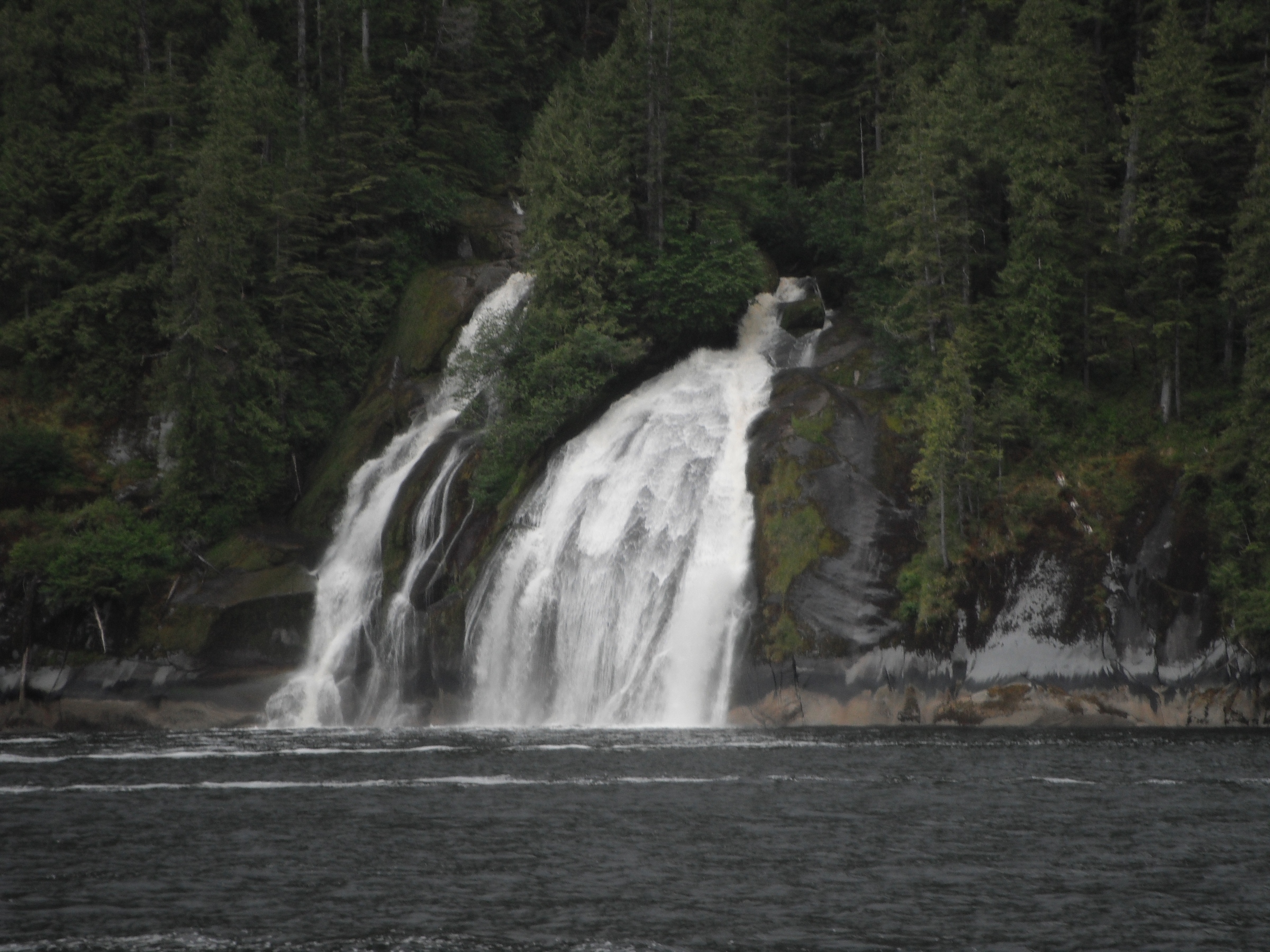
11-3-2011 – San Diego, CA


We’ve spent the last three weeks harbor-hopping.  First we stopped in Newport Beach, then Dana Point, Mission Bay and now San Diego.  Each place has its own character and way of doing things, so it’s kind of like starting over each time we move.  We’re learning a lot about what to expect, and eventually it should start to feel more familiar – right?  🙂 

Newport Beach was a wonderful harbor, and “extremely well-utilized”, as Dan put it.  There were marinas packed cheek-to-jowl, a few places where one could rent a mooring ball, and one teeny, tiny (free) anchorage.  We chose the anchorage, where we were able to be near our friends on Stone Age.  There is a series of public dinghy docks scattered around the harbor, so it was very convenient to take our dinghy to shore to run errands.  We arrived at the busiest time of the day/week, and it was challenging to thread our way down the channel through all of the traffic (which included 3 or 4 sailboat races, scullers, crewers, ferries and copius other recreational traffic) to the anchorage.  We saw quite a few other races and group lessons, but this day had more than any other.  A local vendor, Duffy, had designed an electric boat that really hit a chord in this town.  We saw dozens, or perhaps even hundreds of them!  They’re cute little vessels, somewhat reminiscent of a golf cart on the water.  Lots of people are using paddleboards for exercise (and transport?).  This looks like a surfboard, and they use a long oar from a standing position to move themselves around.  We continue to see these throughout California, along with kayaks.  The most unusual thing we saw here was a guy wearing a turbo thruster pack on his back that sucked up water and blasted it down, causing him to be propeled 10-15 feet up in the air.  It was really cool!  The downside was that he had to drag a floating unit behind him, probably the power source, which limited his range and height.  Newport Beach also had an amazing chandlery, Minney’s, which had two floors of great boat stuff at fantastic prices, and some really friendly staff.  We spent probably twice what we should have, and purchased probably 4 times what we thought we were looking for!  (And they told us that because we bought so little, it was clear that we’d done a good job of planning ahead!)  The anchorage has a limit of 5 days per month, so once we picked up our sails and starter from the repair shop we moved on.
The next harbor down the coast was Dana Point.  We only stayed there two nights.  We anchored near a marine museum which had a tall ship and a research vessel, both of which attracted hordes of schoolchildren daily.  The tall ship took groups of 8 out in a long-boat tender, with 4 oars on each side.  The skipper, dressed in a long maroon coat and triangle hat, yelled out the cadence for the kids to row.  Sometimes they even matched his calls. 🙂  The first night we were there, we heard a strange noise that concerned us all night.  It was sort of a crackling, sounded a lot like heavy rain or even hail, perhaps even like an electrical sizzle?  Dan had visions of the cement flaking off the hull or the new bottom paint being blasted off the hull. We talked with the workers on the research vessel in the morning, and they told us that we were hearing snapping shrimp.  These guys snap their claws so quickly that a cavitation bubble is formed and burst, and reportedly even makes a burst of light.  This makes a very loud noise that stuns their prey or attracts their mate, depending on which web site you believe.  Apparently this is the fastest animal movement known to science.  Go figure!  The marina is on the outskirts of town, so we weren’t able to get much work done, but the small harbor is pleasant and we enjoyed our stay.

Mission Bay was our next stop.  On the way, we crossed the path of a huge school of dolphins, perhaps 100 animals.  They were not interested in playing with our bow wave, but some were leaping fully out of the water – incredible!  It only took them 10 minutes to pass our track at a 45 degree angle.  Late for a 9am convention?  Mission Bay is actually within the city limits of San Diego, but we were trying to delay our entry into San Diego to overlap as little as possible with the crowds of the Baja Ha-ha.  This annual event attracts upwards of 170 boats into San Diego for a late-October departure to head down the coast en masse.  It sounds like a lot of fun, and we considered joining them until we realized that their schedule was more structured (and MUCH faster) than we’re looking for.  They get all the way down to Los Cabos in about two weeks, and we’re now hoping to take 6-8!  We heard more of the snapping shrimp in Mission Bay, by now familiar friends.  The anchorage here is surrounded by a sand beach, so we beached our dinghy when we went into town for a stroll.  The town (as we saw it) largely consisted of an arcade/amusement park, including a roller coaster.  There’s a beautiful beach with breaking waves, the classic California scene.  They also have a very nice series of nightly sunsets, which seems to run continuously year-round, although the time varies slightly so be sure to check local listings so you don’t miss it.
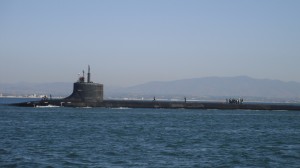
Our final California destination is San Diego.  They have a huge harbor, with an intense  military presence.  On our way into the main entrance, we saw a number of war ships conducting exercises, including a submarine moving around on the surface – you don’t see one of those every day!  The first stop is the Harbor Police dock, to get a permit for one of the anchorages – there are 3 for folks like us!  We got a permit for an anchorage and temporarily joined the ranks of the San Diego Bouncers.  These are folks who move from one anchorage to another, as the policies require.  One anchorage is only available on the weekends, others allow only a 3-day or 30-day stay, sometimes you have to leave town and stay somewhere else, like Mission Bay.

Kathy’s sister Jean came to visit for a week, and we all really enjoyed the contact!  We watched the Baja Ha-ha departure parade, which was a festive event, with lots of flags and a fire boat making a 50-foot fountain.  We spent one night at the Harbor Police dock and stayed in 3 different anchorages while she was here, giving Jean a sense of what this life is like.  We went back to Mission Bay for one night, and Kathy & Jean rode the roller coaster – woohoo!  We sailed a little bit out on the ocean, looking for whales and dolphins, but didn’t have any mammalian sightings until we got back into the sheltered anchorage.  Then a small pod of dolphins circled around our group of boats – and exonerated our claims!  We ended up in an anchorage very near the airport, with a public dinghy dock fairly nearby.  While she was with us, we enjoyed numerous conversations about life perspectives, family, dreams, etc.  What a treat!  We strolled through Little Italy, visited a bicycle shop, and removed our starter (twice), bowthruster motor and hydraulic pump to send off to repair shops.  🙁

We have been practising our (pathetically inadequate) Spanish and Kathy learned her first two guitar chords yesterday.  We expect to spend today and tomorrow dealing with official paper work, preparing for our entry into Mexico.  We need Mexican liability insurance and Temporary Import Papers and fishing licenses and Tourist Visas and an official crew list and Mexican Ham licenses and …

The hydraulic pump is being replaced with a new one, which should arrive tomorrow, but the starter and the bow thruster are happily back in place and functioning well.  The solar panels we installed just before we left Portland are a God send.  They are covering about 90% of our power requirements and the days will continue to lengthen and the sun light strengthen as we head further south.  We are only running our generator about an hour a day. The water maker is also functioning perfectly in these waters.  We are very self sufficient at this point and, assuming the fishing is good, could probably live for 6 months at anchor without need of external resources.

Today we rode aroung town on our bicycles, running errands, but also just enjoying life.  The bicycles have been a wonderful component in our game-plan.  They’re fun, can be tossed in the dinghy for transport to and from shore, have virtually no usage costs, and broaden our range four-fold, allowing us to both see more of the local town and access more of the services that we need.  Although they will certainly succumb to rust (the salt water is impossibly corrosive!), we will certainly replace them when the time comes.  The fall leaves are starting to turn here in San Diego, so it must be time to move on again.  We are almost ready to cast off and continue heading further south.  Our next port of call will be in Mexico!

(Looks like we don’t have any photos with us today, they’re back at the boat, still in the camera.  If we track down internet access again  before we leave this weekend, we’ll try to upload some.)

Once we leave San Diego, our internet access is going to get even scantier – and you didn’t think that was possible!  Our U.S. cell-phones will probably not work, and even if they did, there probably aren’t too many cell towers on this rugged coast.  There aren’t very many towns, so there will be even fewer internet cafe’s.  We’re hoping to get some stuff done with our ham/SSB radio, but it’s new to us, so we may have limited success.  That’s all a long way of saying that it may be a while until the next post – don’t worry: we’ll be back!  We expect to be in Puerto Vallarta to meet Kathy’s family in mid-January, so that’s the worst case.  In the meantime, enjoy life: we certainly plan on doing so!

Posted in Uncategorized | 1 Comment

10-12-2011 – Long Beach, CA

Friday morning we got moving in a leisurely way, with waffles, strawberries and whipped cream.  We pulled the dinghy on board and left Sausalito/San Francisco.  It’s such a pretty city!  Passing under The Bridge was once again a moving experience.  The weather was exactly what we had been waiting for, moderate winds from the northwest, moderate waves, sunny blue sky.  Hooray!  About an hour after we’d left, while we were still working our way across the bar, we spotted a tall ship coming in.  As it turned out, this was the Lady Washington, whose name we had heard just a few days earlier.  When we lost our life raft, we called the Coast Guard, to let them know that it was not an emergency.  They thanked us and said they’d let us know if there was anything more they needed.  A few hours later, they called Dan and said that it had been sighted off the Oregon coast, blowing north.  They wanted to confirm the serial number, so that they could wrap up the file.  Apparently the Lady Washington was heading south down the Oregon coast towards San Francisco, when they spotted it.  What a coincidence!  The story was a bit confused about whether the crew had picked it up or just reported a sighting.  We hailed them on the radio, and found out that they had recovered it, deflated it, and stashed it on deck.  We decided to turn around and follow them back to San Francisco to get it back.  Surely reconditioning a major piece of equipment of that would be less expensive than buying a whole new one!  Dan got on the phone with a life raft servicing company in San Diego, though, and was told that Zodiac life rafts were the only brand that needed to be condemned after deployment in salt water.  They would not re-certify after exposure of the systems.  Drat!  So we contacted Lady Washington again and asked them to dispose of it for us, and we turned around again and headed back down the coast.

We put up our sails, and enjoyed the beautiful weather.  The light winds, combined with the swells directly from the west, made it easier to head a bit further west than our preferred track.  Not a big deal, but we had to think about the route we wanted to take.  We decided to go south southwest until dusk, make a tack to the east and stay on that course for the whole night.  The next day, we tacked again to the south southwest and repeated the process.  It’s a very simple way to travel!  However, it didn’t work out quite as well the second night.  Shortly after Dan & Kathy went to bed, there was a loud crash and Bruce came down to get our help.  We had run into a very sudden gale, and the winds picked up dramatically.  It slammed the main sail from the starboard side over to the port side, turning our course almost 180 degrees.  Then the waves started pounding us as the winds whipped all of our sails.  We had been sailing on 4 sails, so we tried to take some of them down.  The main sail does not do well in high winds, and (as usual) the roller furling jammed when we tried to roll the sail up.  We left that sail for the time being, flogging around, and moved to the jib.  The roller furling line on that one hadn’t been tensioned properly the last time it was deployed and we’d been sailing for two days with the furling line wrapped in a tangle around the forestay about a dozen times. It was jammed, so Dan went out to the end of the bowsprit to untangle and rewind that roller furling line, dealing with 40 knot winds in the pitch of night and riding the rocking-horse in and out of the water.  He probably spent 40 minutes working with that line, but finally succeeded in getting it wound properly, so we were able to roll that sail up.  By this time, we’d slowed down enough to get one of the stay-sails down – without incident.  We came back to the main sail and decided to just lower the whole thing to the deck to sort out in the morning.  (This is the boom that’s 40 feet above deck.)  We fired up the engine and motored the rest of the night.  In the morning, the winds had died back to a reasonable level, and we went out to assess the situation.  The knot attaching the sheet for the main sail to the end of the boom had come undone, but the line itself appeared to be in good condition.  The sail, however, had taken a beating, and will need to have some tears repaired.  It looks like the jib also has some damage.  We count this as the first major (mis)adventure since leaving Portland to head south.  Lesson: Always make sure that your sails are readily furlable WELL BEFORE YOU NEED TO!  So we decided to tuck in well before San Diego to address some of these repairs – and besides there are a few people in the L.A. area that we’d love to see, including Dan’s son Jesse and Kathy’s college friends Beth & Mark.

Two days ago we pulled into Long Beach, where we’ve been anchored for the last couple of days.  As we motored through the last night before we got here, Kathy noticed that there was a problem with the engine, which we’d seen once before.  The heat exchanger brings together the hot cooling water circulating through the engine and cool raw water from the ocean – it’s like a radiator that uses seawater.  One or more of the capillaries that carries the coolant through the raw water broke through, so that the two bodies of water were able to mix.  This means that salt water was circulating through our engine, not exactly a good idea.  Fortunately we discovered this pretty quickly, reducing the likelihood that there will be any secondary damage.  Monday we pulled the heat exchanger off for repair, lowered it into our dinghy and brought it to a public fishing dock, where we had a taxi pick us up and take us to a repair shop.  Our taxi driver was a guy from Sudan who’d been in the States for 16 years, although his wife and children were still back in Africa.  He merrily offered us his business card, in case we’d need him to help us retrieve the heat exchanger the next day.  On the way to the shop, we noticed lots of oil derricks scattered throughout the neighborhood slowly pumping petroleum.  We also saw a lot of ethnic diversity that Portland just doesn’t support: blacks, Latinos, Asians.  It’s fun to find ourselves in a very different place than we’ve been living for many years.  The scenery is also quite different, with palm trees and rolling hills instead of Douglas firs and volcanic peaks.

Last night we enjoyed playing with the bioluminescent plankton.  These guys flash like lightning bugs or sparklers whenever there’s a disturbance in the water.  We saw a stream of them flashing where the anchor line entered the water.  Dan dunked a fishing line in and we watched shimmers of light follow both the lure and the weight.  A sea lion came to see what was going on, and its whole body lit up as it swam underwater.  Next Dan grabbed a big round fender and dropped it into the water, creating a sizeable splash, which made a outwardly rippling kaleidoscope of light.  Bruce tried to capture this on film, with moderate success, and I’m sure we’ll see a new art-form emerge from this evening’s experiments…

This morning we put Bruce and Rich on a plane back to Portland.  It’s been wonderful having each of them aboard for this first stretch of our journey.  Rich brings a wealth of experience and has lots of good advice to offer – and seemed to know everyone there was to know in the SF Bay Area!  Bruce brings a ready enthusiasm and a playful sense of humor.  It’s cool to watch him at play with his photography.  He may join us again in San Diego for the journey down the Baja coast.  Both are good travel companions, flexible and helpful inside as well as out.  We’ll miss them, but we’re also looking forward to a few days or weeks with just the two of us again.

Now we’re sailing (!) a little further down the coast, to Newport Beach.  We are joining our friends John & Lucy and son Kingsley, who are traveling from Vancouver Island to Belize on Stone Age, another ferro-cement sailboat.  The day is calm and sunny and the ocean swells are gentle and smooth. We’re watching pelicans dive-bomb into the water to capture a fishy meal.  Occasionally we also see a fin break the water’s surface.  Sometimes we can identify it as a porpoise or sea lion, but there have been a few that we were less certain of.  Perhaps a larger porpoise, or a shark?  There were earlier reports of blue whales in the area, but we think we’ve passed out of that specific region.  We threaded our way between several oil refineries out on the water. The solar panels are keeping up with our power needs beautifully.  They seem to have been a great investment.  We should barely need to run our generator at all when we are at anchor in a sunny climate.  We’ve spent today sailing with them fully deployed, albeit in very gentle conditions, and they’re powering all of our refrigeration and navigation equipment and our batteries are full.  We’re both sporting wide grins, as we merrily glide down the California coast.  Life is good…

Oil Derrick

Posted in Uncategorized | 1 Comment

10-3-2011 San Francisco, CA

We were all ready to leave Portland right after our party, but the weather gods were not in agreement.  Although the weather in Portland was beautiful, the first of the fall weather was brewing on the sea.  We ended up staying 10 more days – at the public dock that was only intended for 2-day visits.  Oops!  But although a number of other boats came through, we never had the feeling that we were preventing anyone who wanted to use the space from doing so.  One night while we were there, something a bit unusual happened.  At about 2am, we heard a huge bang as if a cable had broken, perhaps one of the shrouds holding up the masts or one holding the dinghy on the back davits.  We looked around the boat for a while to see what could have happened, but found nothing.  We did notice that there was a guy fishing on the dock.  Now fishing on this dock is not unusual, but 2am is an unusual time to do it, and he was using a net rather than a fishing pole.  It turns out that he had used an M80 to stun the fish and was scooping them up as they floated to the surface.  Dan pointed out to him that it was also rough on people in nearby boats, and he apologized and sheepishly faded into the night.

We spent some time looking for a few people to crew with us on the way down the coast, helping to divide the time up on watch.  While it’s not particularly difficult, it can be very tiring to split a 24-hour watch with only two of us.  We asked around, we posted on some web-sites, we networked, we begged, and we eventually found two people who were not only interested, but also available to join us.  Bruce is a “retired” photographer who has recently moved onto a sailboat and begun to form dreams of his own to go cruising.  Rich has been sailing for a number of years – but on other people’s boats, which is a far more economical way of doing things! 

We finally left Portland on Wednesday, 9/28.  We left at 6 in the morning, with the hopes that we could get to Astoria in time to fuel up before the fuel docks closed for the day.  We were hoping to get over the Columbia Bar on the morning slack tide.  Unfortunately we were slowed down for the first few hours due to some really thick fog.  We used our new radio’s hailer to generate the appropriately timed fog whistles, which was gratifying.  We took turns out at the bowsprit, watching and listening for other vessels.  Our efforts paid off in an uneventful voyage.  But the fuel dock attendant had left for the day by the time we arrived.  Fortunately, we realized that the slack tide was more like 9:30 the following morning instead of  7:30 as we’d thought, so we were able to fuel up in the morning and make a smooth passage over the Columbia bar.

The Columbia Bar is notoriously dangerous.  It was once known as the “Graveyard of the Pacific”.  The Coast Guard declares it off limits to small vessels regularly.  But if you time things properly, it’s easy and painless.  This was a wonderful experience for Bruce on his first crossing, and we hope that he will follow in the custom of making well-considered choices!

The first day at sea was beautiful: blue skies and glassy waters.  The down side to glassy waters is that this means there’s no wind.  So we had the sails up for a while, but ended up motoring much of the day.  Friday morning we had a large school of Dall’s porpoises dance around the boat.  They stayed with us for perhaps 15 minutes, coming to the surface in pairs and small groups.  Several did high leaps in the air, getting fully airborne and doing a half twist before coming back to earth.  It was spectacular!  Eventually they tired of us and moved on, but we’ll remember their joyful dance for a long time.

The weather changed and got a bit blustery.  We all got a bit uncomfortable, some more than others (Rich has apparently upgraded to an iron-clad stomach).  Early Saturday morning, a small stowaway joined us: an owl, perhaps a spotted owl.  By this time, we were probably 30 nautical miles off-shore (that’s more like 35 miles to land-lubbers).  He was wiped out and landed on the deck in front of the pilothouse windows for a break.  Here’s a picture of him.  After an hour or so, he got fed up with all of our attention and photography and decided to leave.  But once he was airborne and saw that we were the only game in town he tried to come back.  We were far outpacing him, though, so Dan slowed the boat down and he caught up to us.  After a few circles, he landed on the pilothouse roof, and sat on the awning for another couple of hours.  Once again he flew off and once again he quickly regretted his choice, so he landed a third time, this time settling a bit further forward than his first perch, and not so much in view of the pilothouse windows.  Over the course of the next 36 hours, he shifted to more protected places but grew steadily more bedraggled and we all began to worry about him.  Kathy named him Owliver, and we tried to toss bits of meat to him, but we never saw him even glance at any of it.  Eventually he flew off, very early Monday morning, as we approached the Golden Gate Bridge.  We’ve all read stories of a sparrow or booby bird taking a ride on a sailboat, but this is the first owl any of us know of with a nautical story to tell.

Before Owliver left, on Sunday morning, we woke to find another stowaway.  A female mallard duck was standing on the back deck when Kathy got up, and Dan asked “notice anything unusual?”  Turns out, he didn’t really mean the duck!  Some time in the middle of the rocky night, our life raft bounced its way out of the cradle and deployed itself somewhere off the coast of Cape Mendocino.  Bummer!  Now our to-do list for San Diego is headed with “buy new life raft” instead of “get life raft serviced”.  The duck didn’t stay very long, although she did seem to appreciate the spinach leaves that we tossed out to her.

The waters calmed down over Sunday night, although the winds are still coming from the south.  We decided to stopover in San Francisco for a few days until this group of low-pressure regions pass through and the winds return to the more typical northerlies that we’ve been counting on.  Right now it sounds like Wednesday or Thursday will be better.  Monday morning around 7am we crossed under the Golden Gate Bridge.  The sunrise was beautiful, and here’s a photo to prove it.  We’re currently anchored near Sausalito, but are feeling a little transient.  We may just move the boat to Oakland tomorrow and who knows the day after.  Apparently it’s “Fleet Week” in the SF Bay, and most of the dock space is already full.  Rather than pulling into a dock, we may just anchor and take the dinghy to shore when we need something.

The routine of switching shifts is working out quite well.  We’ve divided the 24-hour day up into two 6-hour daytime shifts and three 4-hour nighttime shifts.  Each person sits one shift three days out of four, and two shifts on the fourth.  Dan & Kathy have been keeping each other company during both of our shifts, but we still get (almost) 8 hours to sleep together.  It’s nice to see the four of us pulling together to accomplish the work that needs to be done – not just watch, but also kitchen chores and other stuff that comes up, and presumably when we start sailing there will be sail trim as well.  We all bring different experiences to the game, and that adds a nice collaboration to the mix.

We’re really all hoping to *sail* from here to San Diego!

Posted in Uncategorized | 2 Comments

8-15-2011 Returning to Portland

It turns out that quite a few people have noticed that our postings have trailed off.  It’s good to know that we’re not just speaking into the void; thanks for the feedback!  Here’s a catch-up post, and we’ll try to do better from here on out.

We returned along the Inside Passage following almost the same route that we took on the way up.  We tried to make pretty good time, because we started to feel some urgency to get back to Portland and wrap things up there, so there isn’t as much to tell.  When we passed Klemtu, we made a long day of it, just to avoid having to stop in the same place wse had gone aground.  🙂  We saw lots of whales and waterfalls, just like on the way up.  Ho hum, another beautiful sunset.

When we turned the corner of Johnstone Passage, around the northeastern corner of Vancouver Island, we passed a tug that was pulling a pair of barges with a huge load of gravel and scrap metal.  He announced on the radio that he was going to be going extremely slowly for a while (while he waited for the tide to turn so he could go through the Seymour Narrows).  We pushed on, hoping to make the slack tide before his.

The Seymour Narrows is one of a number of stretches where huge currents are generated with each change of the tide.  First the tide comes in and the current races in one direction, and then the tide goes out and the current races in the other direction.  Depending on the height of the tide, the current can get up to 7, 10, or even 15 knots!  This particular day it was predicted to get to 10 (but remember our boat likes to travel around 7 or sometimes 8).  We were about half an hour later than we should have been, but it looked like it was still slack so we decided to give it a try.  The whole stretch was less than 2 miles long, with the worst section being only about half a mile.  By the time we got halfway, we were thinking “it’s gonna be tight, but I think we’ll be fine”.  The current picked up some more, and by the time we were 2/3 of the way, we were thinking “hmmm, it’s really not clear whether we’ll get through in time”.  The current continued to rise, and by the time we were 4/5 of the way, we were thinking “uh oh, we just might not make it after all”.  We pushed up the throttle a bit, gunning the engine to move just a bit faster.  The current was really racing, creating giant swirls of turbulence all around us.  The force of our propeller was combining with these rapids to produce huge “holes” in the water just behind us and to either side.  Eventually the speed of the current matched the speed of our motor, and we were essentially stationary and our navigation software showed that the only movement we were making was to the side – so it showed us pointed directly towards the rocks on one side of the channel and then the other.  We were about 9/10 of the way, but it was time to admit defeat.  Our engine was overheating and we were starting to move backwards!  We nervously turned the boat around (and didn’t hit any rocks 🙂 ), and zoomed back through the narrows in record time.  There was a nice little bay just on the other side which we tucked into and waited out the tide.  The second time through was a piece of cake.  The tug who we had slowed down 6 hours earlier passed through just behind us, probably with no idea of the drama that we had just experienced.

A couple of days later, we passed through another narrows, this time pretty uneventfully (although it was even narrower and made Kathy nervous after our recent “adventure”).  We took Dodd Narrows on the way to Ladysmith Harbor, where our friends John & Lucy live on their boat Stone Age.  We happened to catch them on their regular Music Night, so we went along with them to this wonderful event, held in members’ homes.  Everyone brought their own guitars and they all played and sang together from a songbook that they had built together over the years.  It was a very pleasant evening.  John & Lucy are also heading down the coast this fall, but they are continuing down to Panama, traversing the Canal, and heading up to Belize, where they will be the managers of a new marina.  They are very excited about this opportunity, and we hope that they will still be there when we come around from the other direction!

Leaving Ladysmith, we had a spectacular sunset on the Georgia Strait, viewed from our lawn chairs on top of the pilothouse.  The Strait can be rough when the wind picks up, because it’s a very large body of water, but this night it was as glassy as you’ve ever seen.  We motored down to the San Juan Islands, where we hooked up with our friends Wanda & John.  They took the ferry from Seattle over to Friday Harbor to spend the day with us.  What a treat!  We spent some time visiting on the boat, we spent some time listening to music in the park, and we had a nice dinner together before it was time to say goodbye.

The next day we stopped in Port Townsend, to get some advice from the well-known rigger, Brion Toss.  He wandered all over the boat, asking questions about how she performs and what we expect of her.  Then he went to work tightening some cables and loosening others.  When he was done, we knew more about our boat than we had before and we had the confidence that the rigging was back in tune (there was some question, as we’d replaced each of the stays one by one this last year and didn’t really know how to tighten them properly).

As we got to the end of the Strait of Juan de Fuca, and were fueling up in Neah Bay just before heading back onto the ocean, we had one last hiccup.  Our engine wouldn’t start up.  It just stared back at us with those innocent eyes that heavy machinery can make.  We’d actually had this happen once before, but it started again when it cooled down.  So we asked if we could stay an hour and see what happened.  We did, but nothing changed.  The folks at the fuel dock suggested (after we rejected their first idea of just setting us adrift and calling the Coast Guard for help – and they were serious!!!) that we call a guy named Roy who was a whiz with engines.  He turned out to be just the ticket!  He was covered with grease from head to toe, and asked if he should shower before coming over.  We declined. <grin>  He opened up the starter and poked around a bit; ultimately he reseated the brushes and sprayed them with some lubricating fluid, and everything has worked fine since.  Hooray!  Thank you Roy!!!

The trip back was gruelling but otherwise uneventful.  Our friends Gabrielle & Michael had arranged for us to have a slip in the same marina where they live, so it was very easy to come back for a while.  The marina is a small one, about 70 boats, and geared towards liveaboards, especially those who are planning to go cruising.  It was a wonderful place to stay for a few weeks while we fixed some of the things that had broken on our “shakedown cruise”/summer vacation, installed the solar panels that we had run out of time for in April, emptied out our storage unit (Kathy’s “20-pounds-a-week” diet has finally come to an end), and took some classes (we both got HAM licenses and both completed the classroom requirements for getting a Coast Guard certified Captain’s license, but still have to collect some sea-time and do a lot of paperwork).  Everyone at Pirate’s Cove was curious about the new folks on the block, and we got swept into more of a social scene than we’d expected.  It was unexpectedly difficult to leave this new set of friends when we were done!

When we left Pirate’s Cove Marina, we moved to a public dock near Portland in order to have a convenient location for a Bon Voyage party.  When we got there, there was already a boat at the dock – a WWII PT boat, the last one still in operation!  There was a WWII convention going on nearby, and this was one of the exhibits, so there were *lots* of people on the dock that weekend!  There was room for two, though, and we coexisted peacefully, although it was a bit disconcerting to have those big guns pointing at our back deck all day!  The party was a big success.  We had roughly 50 people come over the course of the day to see us off, and it was wonderful to see these friends again after having been gone for several months.  It was also a little sad to be saying goodbye, although many of them expressed an interest in coming to visit us in Fiji or Mexico or somewhere else sunny and/or exotic.  We’re gonna hold you all to those intentions!

Now on to the next chapter of our journey…

Posted in Uncategorized | Comments Off on 8-15-2011 Returning to Portland

7/24 – Tenakee Springs, Alaska

We left Glacier Bay a bit reluctantly.  But it was time to move on to the next chapter in our journey.  Time to head south – to do some more work in Portland, and then on to Mexico.  But first, we had 1200 miles of traveling back over the territory that we’d crossed just a few weeks ago.

We puttered around the entrance bay as late as possible, sailing and watching for whales.  We had a few sightings, but it wasn’t as constant of a show as on our way in.  We found an easy anchorage for the evening, and arrived after dark – no mean feat when the days are 20 hours long!

Since the prevailing winds were mostly from the north as we were headed north, we were enthusiastic about sailing south, but for whatever reason, they have switched to southerly winds, on our nose almost all the way.  The ocean is a bit rougher than we’d like right now, so We decided to wend our way between the big islands of the area instead of going on the outside as we had thought we might.  There’s tons of wildlife up here, so we’re still spotting whales frequently and also porpoises, sea lions, seals, the occassional bear, bald eagles and so many other birds I can’t describe them all.

Our first stop was Tenakee Springs.  This town first showed up “on our radar” when we met Mark, who had just purchased “Contagious”, a sailing hull converted to a fishing vessel, and had it hauled out in Astoria next to us prior to heading home to Alaska to start up a fishing business in his “retirement”.  Mark invited us to visit if we were in the area, and told us that there is nice hiking and kayaking and hot springs in the area.  It’s located near the end of one of the inlets that are now familiar to us, at the north end of Chichagof Island, which we were heading right past on our way back south.  We arrived late on Saturday, and decided to stay until Monday because we wanted to replenish our sagging supply of fresh fruits & veggies.

We were trying to assess whether there was a place for us to dock at the public marina, when a friendly couple pulled up in a small powerboat and asked if we needed any help.  They then “scoped out” the transient dock, concluding that the depths were perfectly fine for our big boat.  We pulled in, handed our bikes down to the dock and pedaled into town where we instantly felt comfortable and at home.

This tiny little town has about 60 year-round residents and swells to about 100 in the summer.  It’s really cute, with a single (dirt) road running down the coast and all the houses built along this road.  There are no cars in the area so the road is more of a lane, with lots Up the hill there’s a second row of construction started, with lots of pedestrians and bicycles. The most notable structure there is the school.  The state requires 10 children before they will provide teachers, etc, and this town struggles to keep a constant attendance of 10.  The winters here are (apparently) long, dreary and very dark, although you wouldn’t know it from the way things looked the day we arrived!  I think this was the first day of real summer weather they had had this year, because everyone was grinning and making excuses to be outside.

We chatted with several people on the road, looking for Mark’s house.  In a town this size, it wasn’t hard to get directions (although it turns out there’s more than one Mark).  One couple sitting on the front porch told us that they’d had a hot dry spell earlier in the spring, that had felt like the desert – and she’d lived in Arizona for a spell earlier in life.  We asked how hot, 100 degrees?  No.  80 degrees?  No.  But it sure was hot and she was glad when the rain came back!

The community seems to be a bit of a retirement destination, largely for aging hippies, full of people of young retirement age (that isn’t an oxymoron, is it?).  They are largely of an earthy mentality, loving their gardens and homes.  As is typical in small towns, each house is designed and built completely differently from all of its neighbors.  Some were built from notched logs, some from aluminum sheeting.  Some were tiny bungalows and others had multiple stories with lots of south-facing windows.  Many had decks with southern exposure, both for the sunshine and the water views.  Some of the properties are owned by folks who use the place as a summer retreat, which makes it harder for the town to hang together cohesively.

It turns out that there’s one more “draw” to the town – it’s situated at a natural hot springs, which have been housed in and turned into a community bath.  They’ve got it quite well organized, with hours for men only and hours for women only – no coed times.  There are several rules, which are clearly posted on the walls of the changing room, and they include washing before getting in and wearing no clothing in the tub.  I’m sure they’ve had issues over the years of something getting in the tub and it being difficult or inconvenient to clean things back up again.  The tub is built at a slight angle, so one corner is lower than the others, and there’s a constant stream of 106 degree water flowing over the edge and out a drainpipe in the back corner of the room.  There are buckets made from detergent jugs or plastic water bottles that one uses to wash up beforehand.  Although there was only one other person, also a traveler, there when Kathy used the bath, this is not surprisingly the town hub for gossip and making of plans.  Almost everyone visits daily, and many homes don’t even have a bath or shower, simplifying the plumbing required for building.

We tracked down Mark’s house, and met his wife Cynthia.  It turns out that we’d just missed Mark – he was out fishing with their daughter Hannah, and wasn’t due back for a couple of weeks.  Cynthia was enjoying a little quiet time to herself, although she didn’t seem to mind the unexpected company.  We chatted for 30 or 40 minutes, and invited her to stop by the boat for a tour and more conversation on Sunday.  Cynthia is an artist, and gave us a booklet that she had put together of some of her (beautiful) photographs of the town.  She also does watercolor and quilting.  When she came over on Sunday, we talked about our lives and dreams, and she introduced us to Blaine who was walking the docks.  Blaine is (was?) a boat designer, and had done some cruising of his own a number of years ago but is now happily settled in Tenakee.  Perhaps we’ll come back ourselves…  This was one of the first “connections” that we’ve made along the way on this new life of ours, and we hope to hook up again, but have no idea if it will come to pass.

Sunday we spent a couple of hours at the coffee house/bakery, and took advantage of their wifi connection to catch up on emails (and post our blogs from Ketchikan and Namu/Klemtu).  We visited with Margie, the waitress whose sister and husband just departed on a journey similar to ours.  They headed south about the time we headed north, so we’re gonna keep our eyes out for Seychelles.  (We thought we recognized the name from some radio conversation that we’d heard a week or two earlier.)

Our first day in town, Aria met a couple of younger guys, who fished and crabbed for a living.  One of them mentioned to her that he had a boat that wasn’t being used (until crabbing season began), and told her she was welcome to stay there if she’d like to stay in town a bit longer.  She pondered the opportunity for more than 24 hours, before packing up her clothes and electronics and moving out of our boat.  Just like that!  It’s been a lot quieter around here without her, and there are fewer people to share the cooking and driving.  Her enthusiasm and observations were a significant addition to our Alaska journey, and have been missed since her departure.

Now it’s just the two of us, heading back down the Inside Passage…

Posted in Uncategorized | Comments Off on 7/24 – Tenakee Springs, Alaska

7/22 – Glacier Bay, Alaska

There aren’t enough superlatives in the English language to describe Glacier Bay.  🙂  We spent just over a week there, and had a fantastic time!  The experiences cluster into two big areas: wildlife and scenery.

As we approached Glacier Bay, we had more and more wildlife sightings, especially whales.  The morning before we arrived, we spotted a moose cow and two calves.  We didn’t immediately recognize them for moose, but later read about moose in the area and realized what we’d seen.  Cool!  As we approached the park, we had an ever-increasing “show” of whales, although they were mostly at a distance so we didn’t really get any photos worth sharing.  We were excited to spend much of that day sailing (and fishing – we caught several more salmon and now have some stashed in the freezer for later).  As you enter the park, they read you a list of rules about boating in “Whale Waters”, and require you to visit the ranger station for a boater orientation.  There was one other boat sitting in with us at the 5:00 session, a luxury yacht owned by a guy who was hosting seven of his friends, but four of the six crew were attending the session.  The paperwork over, we headed back out to motor another 20 miles north to find a place to stay the night.  Like much of our Alaska experience, this place is so big that we were constantly being surprised at the scale ot things; how long it would take to get somewhere or find that a nook we were nervous about fitting into was huge.  It took about 3 hours to get from the ranger station to the first suitable anchorage.  Half of that was in Whale Waters, and my were the whales out in force!  Follow this link:

to see a video that Kathy took of our “three-ring circus” experience.  This was an exceptional experience!  Most of the time when you see a whale, by the time you get the camera out or even snap the shutter most of what you saw is over.  You can sometimes predict that a given animal will come back up for another breath, until he shows his tail heading down to the deep, but the timing is uncertain enough that getting a nice photo is tough.  We all tried, and got a few nice shots, but nothing that really conveys the grace and majesty of seeing these magnificent animals moving fluidly through the water.  It will have to suffice to say that we were all excited and awestruck by the time we stopped for the night.

During the orientation session, the ranger told a story about a whale carcass that had washed up on a beach last summer and provided a long-lasting feast for black bears, grizzly bears and wolves.  Several scientists studied their feeding behaviors and the interactions among them and between them and human observers.  Late in the year the carcass washed away, but oddly it reappeared this summer.  There’s not nearly as much of it left this year as last, but we thought it would be interesting to see nonetheless.  On our second day in the park, we passed by the location she’d mentioned but couldn’t find it.  However, we did spot a wolf walking along the edge of the shore, which was quite exciting.  As we were coming back out of the park at the end of our week, we passed by the same area and were able to identify the spot – when we saw a number of (large!) rib bones and vertebra.  No carnivores this time for us, though.

We did spot a pair of grizzly bears on the beach one evening while we were anchored in front of Reid Glacier, and we watched them on and off for more than an hour.  We decided that one was an adolescent cub still with his mother.  We wondered where they spent the night, because the terrain was very steep and it just wasn’t clear where they could tuck away comfortably.  The next morning when we went for a hike nearby we were all a bit more nervous than usual.  Even though we knew the possibility of a bear encounter could happen anywhere, actually seeing one in the area makes you think it’s more likely the next time.  We did however spot a paw-print in some sand that was probably from the night before.  We had two other sightings of black bears, one of which Dan & Kathy watched from kayaks for 30 minutes or more.

There are also lots of otters, which gave us a giggle – they float so easily on the water’s surface, with their round happy faces!  Their feet also poke up, and Aria thought it looked like they had their legs crossed.  Sometimes they are working food in their hands, but often they’re just chilling out enjoying the day.  Once we saw a mother with her cub sitting on her belly.  Cute!  We also saw quite a few seals and sea lions, but mostly they just pop their head out of the water, take a peek and then go back down again.  The porpoises do much the same, although they typically come up a few times before moving on to other territory.  We got to where we could recognize the sound of a porpoise coming up for a breath, if we were moving around on the deck while at anchor, and we could call the others out for a look.  A couple of times we spotted a porpoise moving underwater right near the boat – whoosh, like a torpedo!  Lastly, there were so many birds around, and of so many varieties, that we were overwhelmed.  Unfortunately, although we grew to recognize a number of the types, we don’t know most of their names.  We did see bald eagles, and loons, and puffins (one or two).  We became familiar with a pigeon guillemot that would take off in flight, bumping the water with the first dozen or so wingbeats – or were they dragging their feet?  There was another little bird that was very comfortable underwater, and would dive down out of sight whenever our boat would get too close.  They travel in small schools, and you could watch them go pop-pop-pop like bubbles as they disappeared.

In addition to the wildlife, we were amazed by the scenery, especially the glaciers.  There are majestic, whitecapped mountains all around, most covered in blankets of tall trees below the snow fields.  There are cottonwoods in addition to all of the evergreens, so fall must be quite pretty (but short).  The days were very long; sunset began around 9:30 and the sky was still quite light at midnight.  By 4am it was full on morning, so our rhythms got a little out of whack!  We got lucky with the weather; although it was chilly by more southern standards, it was generally clear and mild.

There are about a dozen glaciers in the park that come right down to the water, which they call tidewater glaciers.  There are easily that many more that don’t, some of which can be seen from the water.  We visited 4 or 5 of them, and took our kayaks up to hike near the mouth of one that we’d heard was stable.  It had a more sloped face, so the calving is not so dramatic (or dangerous to us tiny little humans).  This one was where we’d seen the grizzlies, though, so we were still feeling wary!  The glaciers are all a jumble of alarmingly blue and white facets, often with waterfalls pouring from them.  Some of them had caves and some spires that were fun to try to look through.  The Lamplugh glacier had a huge cave at the bottom, which we could yell into and hear our echo come back (although at half a mile, it wasn’t a loud echo).  We didn’t see any calving during our glacier visits, but we know it happens all the time.  We saw lots of floating ice, similar to our experience in Tracy Arm, and Aria enjoyed scooping some of the small chunks up for later use in a drink.  There’s something whimsical about drinking water that hasn’t been in circulation for centuries.  We still have a shoebox-sized piece in our freezer, which we’ll probably enjoy when we’re in the tropics.  🙂

The water around the glaciers, be it in Tracy Arm or Glacier Bay has some amazing qualities. As we got closer to the glaciers the water turned bright turquoise (Kathy’s word) or aquamarine (Dan’s word) and often became milky from the glacial silt that washed down.  Imagine drifting through pistachio-colored milk.

Glacier Bay is truly a gift of nature that was fortunately set aside as a national treasure.  The National Park Service works hard to balance the needs of many constituents, and they’ve generated a (long) list of regulations for visitors to comply with, from limited permits to speed limits in whale waters to areas with quiet hours to non-motorized areas.  We had heard that these rules were burdensome and invasive and that they made the park just about not worth the trouble.  They only allow 25 recreational boats in on any given day, and while a few reservations can be obtained months in advance, most must be requested 48 hours before entry.  Since they aren’t in cell-phone territory, this causes some logistics challenges.  However, the park staff are very friendly and made things as easy as possible within those parameters.  Before getting through to them from Juneau, we actually considered not visiting the park but “making do” with many of the other spectacular places nearby.  While these other places are certainly also beautiful, we were enthralled by Glacier Bay.  We did not find the rules to be at all burdensome, although keeping track of which rules applied to which locations was sometimes a little tricky as the boundaries are always in flux.  We actually extended our visit by two days, by radioing the ranger station just before our permit expired, because we just weren’t ready to say goodbye to the whales.  Our last night there was in another of those magical spots.  We had numerous otters and porpoises come to visit us and several whales spouted nearby that evening.  It’s with somewhat heavy hearts that we turn our boat around and head south, to close this chapter of our travels and begin the next.

Posted in Uncategorized | Comments Off on 7/22 – Glacier Bay, Alaska